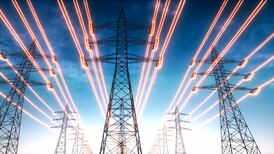
Ireland’s energy needs are only going up, and the causes are more complicated than you might think. While data centres undoubtedly account for much of the recent growth in demand, there are also factors such as population growth and the expansion of other industries. The challenge isn’t just to deliver more energy but to do so in a way that is reliable and affordable.
“Ireland’s electricity demand is growing due to a combination of factors including population growth, housing delivery, economic expansion, the electrification of heating and transport, and increasing demand from industry,” says Siobhán O’Shea, chief infrastructure officer at EirGrid.
The issue is national, but it is one that has consequences at individual and commercial levels. Lilly, for example, is a major pharmaceutical manufacturer, for which uninterrupted supply is essential.
“Our Kinsale and Limerick manufacturing sites run around the clock, and because of the medicines we make for patients, a resilient energy supply is essential to our ability to deliver reliable supply to our patients,” says Colm Murnane, director of ECU (environmental control unit) at Lilly Kinsale.
RM Block


Increasing electricity generation is only useful if the grid can accommodate it. That means the connection capacity and reliability are of particular importance. Investing in the grid is essential to future economic growth.

“Generation only helps if the network can move it to where it’s needed, and if businesses like ours can connect to it with confidence,” says Murnane. “We need confidence that the connection capacity and the quality of supply will be there when we need it, not several years later.”
EirGrid is responsible for delivering much of the infrastructure needed to address these concerns. The Government and regulator have committed up to €18.9 billion to electricity network investment by 2030, across EirGrid and ESB Networks.
“Through this programme, EirGrid will progress 381 transmission infrastructure projects in partnership with ESB Networks, including new substations, upgraded transmission circuits and strategic reinforcements of the grid,” says O’Shea.

Of course, investing in the grid is only one piece of the puzzle. Ireland also needs to turn the wind energy at its disposal into projects that generate real capacity. Connectivity to the grid is one obstacle to this but so too are challenges around planning and infrastructure.
“Ireland has a strong pipeline of both onshore and offshore wind projects, but the challenge is turning that pipeline into projects that are built and generating electricity,” says Noel Cunniffe, chief executive of Wind Energy Ireland.
“For onshore wind, the biggest challenges are getting projects connected to the grid quickly enough and through planning, while offshore wind needs the same urgency around grid and planning alongside investment in the port infrastructure needed to build projects.”
Everything has a price. Energy security is a consideration, but so too is affordability. Continued reliance on imported fossil fuels exposes Ireland to volatile international prices. Greater use of domestic renewables could help with both security and price.
“One of the best ways to bring down energy costs is to produce and use more clean electricity here in Ireland,” says Cunniffe.
“By investing in our electricity grid and energy storage, we can make better use of the wind and solar power we already generate, while enabling more renewable energy to come on to the system.”
While the savings from renewables, particularly in the long term, are attractive, there is more to the affordability question. EirGrid, for example, doesn’t set consumer electricity prices but participates in national discussions on affordability.

“While EirGrid does not set electricity prices, in relation to energy affordability, we are a member of the National Energy Affordability Taskforce, which is currently developing an action plan to address costs across the energy system,” says O’Shea.
The duty to improve matters doesn’t just rest with the State and energy providers. Industry can play its part, with better consumption management and investments in efficiency. That’s what Lilly has set out to do with its Irish operation.
“Industry has a role too. Businesses across the economy are investing in efficiency, flexibility and lower-carbon energy at their own sites, which eases the load on the grid and makes them better partners to it,” says Murnane.
Greater efficiency can reduce pressure on the system, but maintaining a reliable electricity network also requires technologies that balance supply and demand. Smarter storage and connectivity are proving increasingly important as the use of renewables expands.
“We must continue investing in system flexibility through technologies such as battery storage, interconnection and digital innovation. These solutions will become increasingly important as renewable generation grows,” says O’Shea.