Ireland’s highly skilled workforce has long been central to its economic success and its ability to attract foreign direct investment. But as AI, automation and the transition to a lower-carbon economy reshape roles across every sector, there is a pressing need for upskilling and retraining.
At Fidelity Investments, the skills required in software engineering are changing at unprecedented speed. Lorna Martyn, chief information officer, corporate services technology, at Fidelity Investments, says core engineering fundamentals, problem solving and critical thinking remain essential, but deeper business knowledge, communication skills and advanced security and risk capabilities are increasingly important.
“The ability to pivot is a requirement and a lifelong-learning mindset is the key to remaining relevant in the longer term,” she says.
In Kinsale, AI, automation and analytics are changing how pharmaceutical firm Eli Lilly operates.
RM Block


Vincent Gilligan, Eli Lilly associate director for AI transformation, says every role is evolving to use technology, but the purpose of the work has not changed.
“Everything still starts with the patient at the centre to deliver on our mission of making medicine with safety first and quality always,” he says. “The people who thrive combine deep process knowledge with real comfort around data.”
Timmy Mulvihill, senior director of human resources at Edwards Lifesciences Ireland, says operations at its Shannon and Limerick sites are becoming increasingly automated and data-led, with routine inspections moving towards automated testing, real-time analytics and digital quality controls.

“Teams require higher capability in digital problem solving, and systems engineering so that we maintain regulatory compliance and operational resilience for the patients who depend on our technologies,” he says.
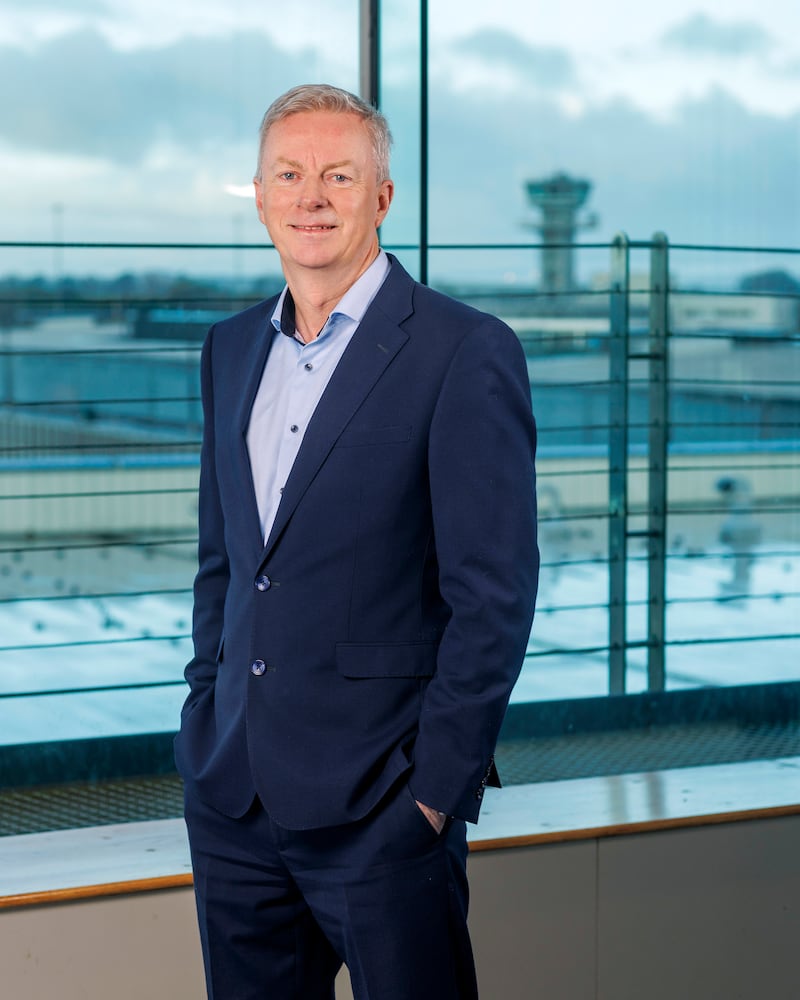
Ray O’Driscoll, chief executive of the Shannon Airport Group, says the fastest-changing skills in his organisation are in data analytics, digital operations, cybersecurity and sustainability, while the move to a lower-carbon economy is creating demand for expertise in energy management, ESG (environmental, social and governance) and sustainable infrastructure.
“Success increasingly depends on employees combining technical capability with adaptability and commercial awareness,” he says.
As AI absorbs more routine work, judgment, creativity, communication and critical thinking are becoming more valuable.
Bill O’Shea is vice-president of EMEA at learning platforms Coursera and Udemy. He says AI is changing how people work across almost every role, but access to tools is only part of the answer.
“Skills have a shorter shelf life than ever, so we need to keep learning, adapting and updating our approach as the technology evolves,” he says.
At Smurfit Westrock, digital skills are evolving across a wide range of roles, including the use of AI to support communications with the company’s 96,000 employees, in 28 languages.

Gillian Carson-Callan, chief human resources officer, says collaboration, relationship management, problem solving, creativity and judgment remain as important as ever.
“Our emphasis is on helping people develop the right combination of digital and human capabilities,” she says.
Universities are responding to the same pressures. John Cotter, professor in finance and chair in quantitative finance at UCD Smurfit School, says AI has transformed how finance professionals capture, clean and analyse data. But he warns that students must use it as an aid rather than a substitute for learning.
“If you use it to do everything, not just an aide, then you will end up not learning, so you have to encourage people to blend their own experience and the use of AI,” he says.
Employers are investing in talent pathways that begin long before recruitment.
Fidelity supports Stem education and work experience through primary and secondary school, alongside apprenticeships, scholarships, internships, graduate programmes and postgraduate research.
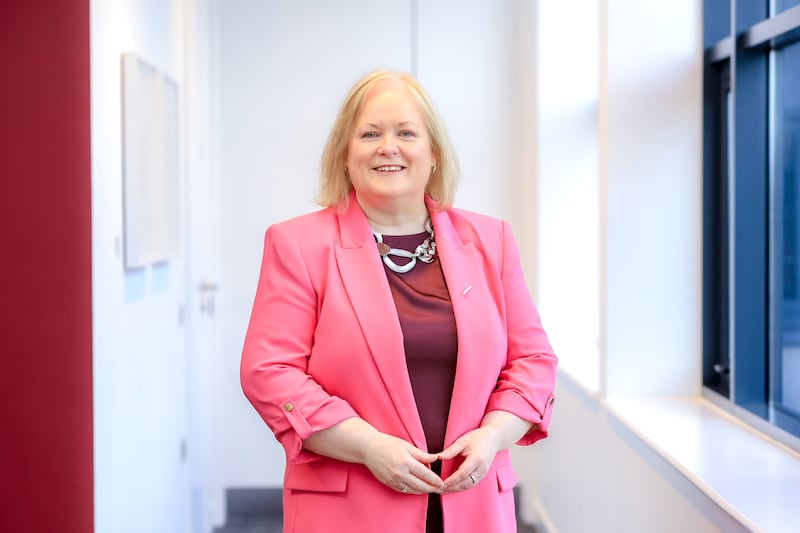
“Ireland needs to accelerate interest in Stem from an early age while creating flexible learning pathways that combine strong academic foundations with practical experience,” says Fidelity’s Martyn.
Johnson & Johnson has made early engagement a priority through its Winning in Stem2D university programme, which provides bursaries, mentoring, site visits and career development. At its 2026 StemFest in Limerick, 82 students from seven universities received awards.
Anna Rafferty, senior sponsor for WiStem2D and senior director, EMEA, government affairs and policy, at Johnson & Johnson, says direct contact with industry can make a real difference to students considering Stem careers.
“It helps them understand how their learning applies in practice and discover career paths they may not have considered,” she says.
The gender gap remains a challenge. CSO figures shared in April 2025 show the Republic leads the EU in Stem graduate output, but with 50.1 male Stem graduates per 1,000 people compared with 28.7 female graduates – the largest gender differential in the EU.
Employers are also retraining existing staff. More than 100 Eli Lilly colleagues have completed a professional diploma in analytics through its partnership with UCD Professional Academy, with others progressing to Python, machine learning and AI for business courses.

Edwards Lifesciences has delivered more than 38,000 training hours across its Shannon and Limerick sites, while more than 70 per cent of its Irish engineering team are University of Limerick graduates.
“We are committed to our team’s growth and development, and to building a talent pipeline in the communities where we work and live,” Mulvihill of Edwards Lifesciences says.
Whatever happens, Ireland cannot coast on past successes. Skills are changing faster, and competition for talent is intensifying – but that talent wants proper housing, infrastructure and quality of life if they are to stay in Ireland.

UCD’s Cotter says Ireland must remain open to international talent and make itself a place where people want to build their lives.
“We have to bring in talent. We have to keep doors open,” he says. “Aviation finance is a success story in financial services in Ireland, and it is led by people who want to live in Ireland and to bring family up here.”
At the Shannon Airport Group, O’Driscoll says balanced regional growth would allow talented people to access rewarding careers, affordable housing and a high quality of life outside Dublin.
Mulvihill says deeper partnerships between industry and higher education would enable curricula to adapt quickly to areas such as process automation, digital technologies and advanced engineering.

Udemy and Coursera’s O’Shea says the challenge is not simply to master new tools, but to combine them with the human skills that give them value.
“The people who can bring both together, using AI confidently while thinking critically and creatively, will be best placed to succeed,” he says.
Building the skills pipeline
Ireland’s talent advantage will depend not only on identifying the skills of the future, but on creating practical routes for people to acquire them. Eight organisations describe the programmes, partnerships and policies they believe will make the difference.
“At Fidelity Investments Ireland, we have a long history of supporting talent at every stage, from building the talent of the future through access to Stem education and work experience throughout the primary and secondary school cycles; supporting access and growth pathways through apprenticeships; providing scholarship, internship and graduate training opportunities at university level; and engagement in industry research through academic collaboration at the postgraduate level. Our success depends on investing in the employees of tomorrow while empowering and supporting the employees of today.”
• Lorna Martyn, CIO, corporate services technology, Fidelity Investments
“Every tool, AI included, is meticulously assessed before adoption, which takes experienced, trusted people. Ireland’s real advantage is trust, rigour and safety on behalf of patients. The one thing is to protect those fundamentals: invest in the people who uphold them and keep them current with every new technology so that trust holds.”
• Vincent Gilligan, associate director for AI transformation, Eli Lilly Kinsale
“We take a long-term approach to talent development, with a strong focus on continuous learning, leadership development and internal career progression. We invest in training across operational, technical and commercial disciplines and work closely with education and training partners to develop future talent pipelines. Our objective is to ensure employees have opportunities to build skills and grow their careers as our business evolves.”
• Ray O’Driscoll, CEO, the Shannon Airport Group
“We have masters and undergraduate students with a financial data science degree, which is about data capture analysis. We also have an exec diploma in aviation finance, for people working in the industry or who want to get into it or transfer to it. Internships are back on our programmes, and they often turn into employment. Companies need to accept the people side of things, with graduate programmes and partnerships with students.”
• John Cotter, professor in finance and chair in quantitative finance, UCD Smurfit School
“The Smurfit Westrock Academy is an integral part of how we nurture talent, offering growth and development opportunities for future and existing leaders at all stages of their career. Our Open Leadership programme, delivered in partnership with Insead, is a good example of how we develop leaders. Many of the academy alumni have progressed throughout the ranks of the company to take up senior leadership positions across the world.”
• Gillian Carson-Callan, chief human resources officer, Smurfit Westrock
“The most vital step is deepening strategic partnerships between industry and higher education to co-design learning that keeps pace with rapid technological change. Expanding structured apprenticeships and continuous education pathways alongside degree programmes ensures both new entrants and existing workers stay ahead of the skills curve.”
• Timmy Mulvihill, senior director human resources, Edwards Lifesciences Ireland
“We’re taking a two-pronged approach to building AI skills. First, we’re investing in formal skills building by creating custom courses for our employees and pointing them with the best existing content on our platforms. Second, we’re integrating learning into the flow of work through our AI Spark peer-sharing sessions. Formal learning builds the foundations, while sharing experiences and putting new skills into practice helps turn knowledge into lasting habits.”
• Bill O’Shea, vice-president of EMEA, Coursera and Udemy
“Through our university programme, we support students with mentoring and practical experiences that complement their studies. StemFest brings that support to life, giving students the opportunity to celebrate their achievements, meet their peers and connect with J&J colleagues who can share their experience and advice.”
• Anna Rafferty, senior sponsor for WiStem2D and senior director, EMEA government affairs and policy, Johnson & Johnson