
Like many people in Moscow, Alina, a 34-year-old project manager, lost the habit of using cash after years of ubiquitous electronic payments.
She had to rediscover her analogue skills this year when Russia’s intelligence agency took effective control of the country’s internet, denying access to millions of people in the capital and beyond.
“I had to ask my colleagues for cash to pay for my lunch. Then to buy me a bus ticket so I could get back home,” Alina says, remembering the impact of the first days of the shutdown in March. “It took me a while to find my wallet and get used to carrying it.”
Internet outages have affected cities across Russia since last summer, hitting a country that until recently had one of the world’s highest rates of online usage and was deeply dependent on electronic payments.
RM Block


This spring, the blackouts finally reached Moscow, home to roughly 10 per cent of the country’s population.
The capital endured days-long mobile internet shutdowns for the first time since the start of the 2022 full-scale invasion of Ukraine – a drastic change from the Kremlin’s previous policy of shielding Moscow from fallout from the war.
Since March, the outages have been intermittent but indiscriminate.
[ Speaking out about democracy in ‘the golden age of surveillance’Opens in new window ]
They come all of a sudden, not with a law or an announcement, but with a series of absences: a mobile signal that vanishes, a route that will no longer load, the sudden uselessness of apps on which daily life had come to depend.
In a separate crackdown, calls on Telegram, an app previously used by about 90 million people in Russia each month, now seldom work anywhere in the country, while messages are delivered only sporadically.
One early sign of the scale of the internet outages in Moscow came in March when the city’s so-called “golden” public toilets – facilities that only accept card payments and were expensive to install – stopped working. Another was a rise in the use of cash. A third was a warning by Russia’s tech companies that the restrictions could hit their profits.
“Nothing works,” Aigul, a confectioner at a Moscow supermarket chain, said in a TikTok video during one of the shutdowns. “We’re living as if we’re back in the Stone Age.”
But this is no mere case of institutional incompetence. Behind the outages, according to former and current officials and businessmen, is a quiet transfer of power inside the Russian state as the FSB, the successor agency to the Soviet-era KGB, takes charge in deciding when and to whom to grant internet access.
“They have been effectively given the main switch controlling Russia’s internet,” says Sarkis Darbinyan, a lawyer specialising in online freedoms.
The shift is a sign of how deeply the Ukraine war – and Russia’s domestic response to it – has transformed life within the country, as the FSB grows in power and seeks to head off perceived threats to Vladimir Putin’s rule from external and internal foes.
The new controls have angered many ordinary citizens, who are now scrambling for workarounds. But they also demonstrate the extent to which a country such as Russia can reshape the internet to its own ends even if that comes, as some industry figures warn, at great cost.
Pavel Durov, Telegram’s founder, wrote last week that the crackdown was driving away Russia’s tech talent. “The specialists that could have created a smartphone operating system in Russia are leaving the country en masse,” he said.
Durov, who is based in Dubai, added: “The Russian official who broke the internet and set the country back decades in the name of ‘digital sovereignty’ deserves a national security medal – from the US.”
The power grab
The FSB has long had a role in monitoring and surveilling internet use in Russia.
Until recently, online regulation was largely shared between civilian authorities such as the presidential administration, the ministry of digital development, and Roskomnadzor, the watchdog that administers censorship filters.
But starting from the middle of last year, the FSB’s Second Service, the agency’s powerful domestic security arm, lobbied for direct control, according to people familiar with the situation.
Under its long-serving chief, colonel-general Alexei Sedov, the Second Service is one of the FSB’s main instruments of control, targeting opposition activists, civil society groups and perceived internal enemies.
It had two main arguments for its internet power grab, which was first reported by The Bell, an independent Russian media outlet in exile.
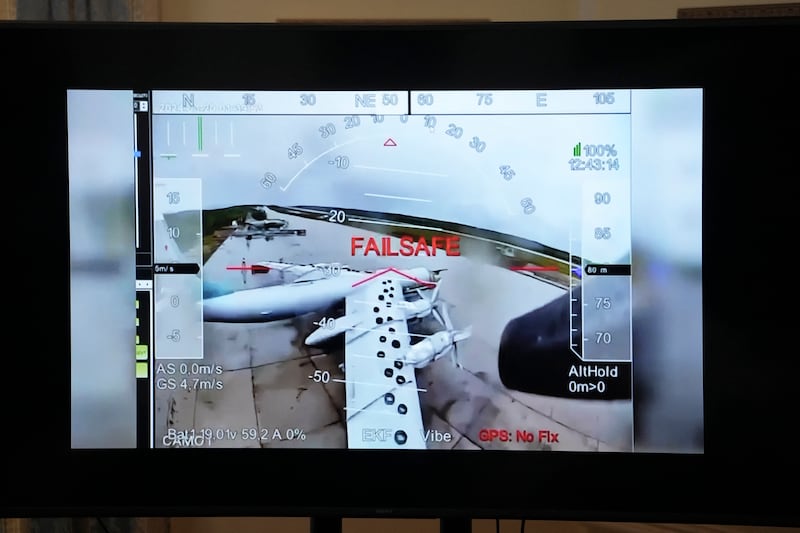
One concern was Ukraine’s intensifying use of Russia’s own mobile internet infrastructure for launching drone attacks inside the country. A year ago, in an operation known as “Spiderweb”, more than 100 smuggled drones that were launched from wooden crates on trucks attacked Russian air bases thousands of kilometres from the front.
[ Russia says it could attack western commercial satellitesOpens in new window ]
“Drones operate by linking up with mobile connection towers, so the easiest way to disable them is to disable the towers altogether,” a senior Russian businessman says. Once the towers are out of operation, access to mobile internet goes down.
Then there was the separate issue of Telegram, which presented a double threat from the FSB’s perspective: a space where Ukrainians can plan attacks or recruit Russians, and where the country’s domestic opposition can still gather.
Counter-intelligence services first started to worry about Russia’s vulnerability to operations carried out on foreign-based messaging services at the end of 2024, according to another senior Russian businessman.
“Russia does not want to find itself in a position where hostile intelligence services can use the messenger for sabotage,” he says.
In April, FSB head Alexander Bortnikov complained during a televised video call about “the enemy stepping up activity ... on social media and messengers”. A month later he described the use of software embedded in Tehran’s video surveillance systems to kill Iran’s leadership as “an alarming signal”.
The Telegram ban came in fits and starts. Access slowed since August last year, but the censorship watchdog only confirmed in February that the block had been in place, since when the service has been largely inaccessible.
Such measures gave the FSB a new way to suppress dissent and prevent people from “communicating with each other in an uncontrolled way”, a former senior official says.
On Sunday, Russian state television’s main weekly newscast featured an unexpected guest to justify the FSB’s concerns: Edward Snowden, the whistleblower who claimed asylum in Moscow in 2013 after revealing widespread US surveillance.
Snowden appeared alongside top retired FSB officials to back up the agency’s claims that western companies were using technology companies’ infrastructure to spy on Russia.
Neither the Kremlin, which did not respond to a request for comment, nor the FSB has officially confirmed that control over Russia’s internet has shifted. But official documents and public comments reflect the change.
In late May, Putin ordered the government and the FSB to ensure “uninterrupted operations” for “critically important” services during internet outages – an apparent acknowledgment that such shutdowns will continue to occur.
The ministry of digital development now also says that it “clears” with security services which sites should remain accessible at such times – an admission that would have been unthinkable just a year ago.
Not everyone is impressed by the FSB’s new role. “They are like a monkey with a grenade: it flicks a switch, and half of Siberia is accidentally left without internet,” says the former senior official. “That is their level of expertise.”

Forced digital detox
Writing parents an email instead of calling them on a messaging app... Dropping into a coffee shop – or even one of the “public wifi access points” set up by the authorities – to answer a message... Driving routes by memory... Carrying cash and phoning for a taxi instead of ordering one through an app...
These are among the routines many Russians thought had long been left behind. But they have now returned to daily life.
‘So I earn money, pay them taxes, and they block the internet – where I earn that money so I can pay them taxes. Have I got that right?’
— Konstantin, entrepreneur
During the Moscow shutdown in March, state media were soon filled with alternative navigation tips, including suggestions such as using the stars or buying a physical map. “You cannot rely on the internet alone. This is the new reality,” Yaroslav Nilov, a member of parliament, told a Russian news outlet in April.
For many, the new reality is an enormous change.
According to OECD data, Russia has a greater proportion of internet users than European countries such as Italy, France, Germany and Poland.
Shoppers could buy a kilogramme of tomatoes at a market by transferring money directly to the elderly woman selling them, or donate to a street musician through a QR code linked to a banking app.
Such transactions have been greatly complicated by the shutdowns. Although statistics from different sources vary, the central bank has acknowledged that the outages have been partly responsible for an increase in demand for cash.
[ Why is Putin now talking about the war in Ukraine ‘coming to an end’?Opens in new window ]
A senior executive at one of Russia’s largest retail banks says it has begun allowing transactions through its point-of-sale terminals during shutdowns – even if it cannot connect to the purchaser’s account. Instead, it just behaves as if “the customer had enough money” to cover the payment.
Russia’s IT groups, such as Yandex, the country’s answer to Google, and Ozon, its Amazon-style retailer, have named the internet disruptions among the main risks to their financial results.
Businesses tied to online commerce have suffered the most: car-sharing, delivery services and online retailers, says Ivan Fedyakov, chief executive of Infoline, a Russian analytics company.
Amid the restrictions and growing anxiety, people are starting to spend less, he adds, while some wonder whether to leave for another country without such curbs. “Neighbouring Kazakhstan looks, by contrast, like an oasis of comfort.”

Workarounds
The bans on Telegram and WhatsApp have pushed ordinary people to opt for state-developed alternatives or switch to previously unpopular apps, including the US’s imo, South Korea’s KakaoTalk and Turkey’s BiP.
Some have started using Google Chat, previously reserved for work communications, or are now communicating with friends and family via email rather than direct messages.
Others have found less-straightforward workarounds. Alina Kudarova, a blogger living in Bali, circumvented restrictions by using a pet camera rather than a more orthodox app to speak to her family back in Russia. She went viral after posting a video of a conversation in which her parents lie on the floor waving at the lens, while a fluffy white cat looks on in apparent bafflement.
Russia’s market for virtual private networks has “exploded” this year, says Alexey Kozliuk, chair of the VPN Guild non-profit association. In March alone, downloads of VPN apps on Google Play grew 14-fold year-on-year, he says.
But he adds that there is now “an active cyber war between censors and VPN providers ... A service that worked yesterday may be disrupted today and patched tomorrow.”
Olga, a HR manager in her early 60s, concurs that in her hometown of Voronezh, a VPN does not guarantee access to blocked websites.
“It keeps cutting in and out,” she says. When she recently crossed over the border to Georgia for a holiday, she was amazed by the difference.
“Wait, Telegram and WhatsApp work?” she recalls exclaiming. “Even the videos download, without VPN, as simple as that!”

The Kremlin’s unlikely critics
Moscow’s internet curbs have provoked dissent from quarters that rarely criticise the Russian state, from schoolchildren and lifestyle bloggers to pro-war reporters and regional governors.
The restrictions topped the list of Russians’ biggest concerns by a wide margin in the first quarter of this year, according to a study of media and social networks by KROS, a large Russia-based PR firm. No other category came close.
“This did not happen with Covid, or even with mobilisation [for the Ukraine war]”, its authors wrote.
Feeds on TikTok and Instagram, both accessible in Russia only via VPN, have been filled with emotional videos of young bloggers and ordinary people, often in tears.
[ Facebook removes network of Russia-linked accounts, pagesOpens in new window ]
“So I earn money, pay them taxes, and they block the internet – where I earn that money so I can pay them taxes,” Konstantin, an entrepreneur from Tyumen, said in an Instagram post. “Have I got that right?”
Vyacheslav Gladkov, then the governor of the border region of Belgorod, warned last year that access to Telegram was a matter of life and death, as it was used to track incoming attacks. Pro-war bloggers, who had drawn audiences of millions of Russians on Telegram, sounded the alarm: the soldiers rely on it at the front.
Putin’s own presidential administration has tried to push back against the FSB, mindful that public anger over the bans could affect parliamentary elections in September, according to two former senior Kremlin officials.
‘Russia’s system of online censorship and restrictions is often compared with those of Iran and China. But neither model fully captures what is happening in the country’
— Andrei Soldatov, Center for European Policy Analysis
“There’s a big fight over the internet between the FSB and the civilian Kremlin officials, who are all against the bans,” one says. “Putin is going to have to adjudicate at some point. There are already [external] signs they are having a big back and forth.”
The former official adds that the FSB “keep coming up with all sorts of reasons for the ban and none of it ever really makes that much sense ... Putin has not really explained it either.”
But Alexandra Prokopenko, a fellow at Carnegie Russia Eurasia Center, says the civilian officials “have no leverage to change the situation”. Like other analysts, she expects the restrictions to tighten further after the September elections.

Brave new internet
As it blocks foreign platforms, Russia is building what officials call a “sovereign Runet”: a domestic version of the internet that the special services can easily surveil and control.
The Kremlin has pursued such a goal for years, but its approach has changed since the full-scale invasion of Ukraine.
Online censorship long relied largely on targeted bans, as the authorities selected individual sites or services and blocked them. Now the system has moved to a whitelist model – a still limited but steadily expanding list of state-approved websites and apps that continue to function even during internet shutdowns.
“They are now pursuing a strategy of blocking everything by default,” says Alena Epifanova, a cyber researcher at the German Council on Foreign Relations in Berlin.
The whitelists include Russian services that have long been popular, such as Yandex Taxi and online marketplaces, as well as home-grown substitutes promoted to pull users away from foreign, blocked sites.
One example is Max, a messenger app developed by VK, a social media group in effect controlled by Yuri Kovalchuk, one of Putin’s closest friends. Modelled on China’s WeChat, it combines messaging and government services and has no end-to-end encryption.
Putin designated Max as the country’s “national messenger” last year. Since then the state has instructed employees of state-funded organisations to switch to it, while moving everything, from teacher-parent chats to patients’ correspondence with doctors, to the platform.
One strategy has been to buy a cheap second phone for Max and other state-linked apps while keeping VPNs and banned services on a separate device, several people who do so told the Financial Times. Some officials have begun printing business cards with their real mobile numbers and their Max numbers side by side.
Users complain that the glitchy service can send video messages to other contacts rather than the intended recipient. Installation of the app also automatically subscribes users to a news channel run by Vladimir Solovyov, one of Russia’s leading propagandists, with no obvious way to unsubscribe.
But many ordinary citizens assume there is another more important feature: that Max is fully transparent to Russia’s security services.
“Russia’s system of online censorship and restrictions is often compared with those of Iran and China. But neither model fully captures what is happening in the country,” says Andrei Soldatov, a senior fellow at the Center for European Policy Analysis and an expert on Russia’s security services.
“China built control into its internet from the start, while Iran never had Russia’s level of internet and technology penetration,” Soldatov says. “Russia’s approach,” he adds, is “unique” and chaotic: “They are improvising fixes for specific needs, rather than working to a grand strategic plan.”
One former senior official is still struck by the scale of the change in the country. “Even during the war, three years or so ago, ‘the Chinese internet’ was almost a dirty phrase in Russia,” he says.
But after returning from China recently, he realised that, by comparison, “the internet in China is fantastic ... You get there and you can breathe freely.” – Copyright The Financial Times Limited 2026
[ AI spying tools unnerve Putin as surveillance risks mountOpens in new window ]


