

You can take your pick between the Olympics, next taking place in Los Angeles in 2028, and the Fifa World Cup, which kicked off in June across the US, Canada and Mexico, for the greatest show on Earth.
In either case, the bill is substantial. The rough estimated cost to the three nations hosting the World Cup is around €3.5 billion, while the LA 2028 games are on course to cost more than €6 billion.
Ireland isn’t aiming for events of quite that magnitude but it has landed some pretty big ones in recent times. You’d need to be living under a rock to not be aware of the Ryder Cup coming to Adare Manor in 2027, while the following year Ireland co-hosts Euro 2028. And then there’s the not insignificant matter of the Irish Open golf championship being held later this year at the Trump International Golf Links in Doonbeg, Co Clare.
The Government will, naturally, provide substantial financial support for the Ryder Cup and the Euros, as it intended to do for the failed bid for the men’s 2023 Rugby World Cup. The question is, will these events prove worth it to the taxpayer?
RM Block


In the short-term, there appears to be a clear case for the upcoming events in 2027 and 2028 to help arrest a decline in tourism to the State.
In January, The Irish Times reported that the number of overnight visitors to Ireland in 2025 was just over 6.4 million. This was a drop of 3 per cent from the 6.6 million visitors of 2024.
The data, from the Central Statistics Office, showed that spending from foreign visitors for 2025 was down 9 per cent, from €6 billion to €5.5 billion, on the previous year.
The Ryder Cup’s tendency to attract high-spending tourists offers an opportunity to claw some of that back. This is particularly relevant because North America accounted for 24 per cent of visitors last year while 33 per cent were from continental Europe. (The largest cohort was, unsurprisingly, visitors who live in Britain.) Given that the Ryder Cup is a Europe v the USA event, these core markets will obviously be relevant in any boost it provides.
“When Ireland hosts the Ryder Cup at Adare Manor in 2027, the economic benefit will extend far beyond golf itself,” says Adrian Cummins, chief executive of the Restaurants Association of Ireland. “For the hospitality sector, this is an immeasurable opportunity to showcase the very best of Ireland to a worldwide audience.
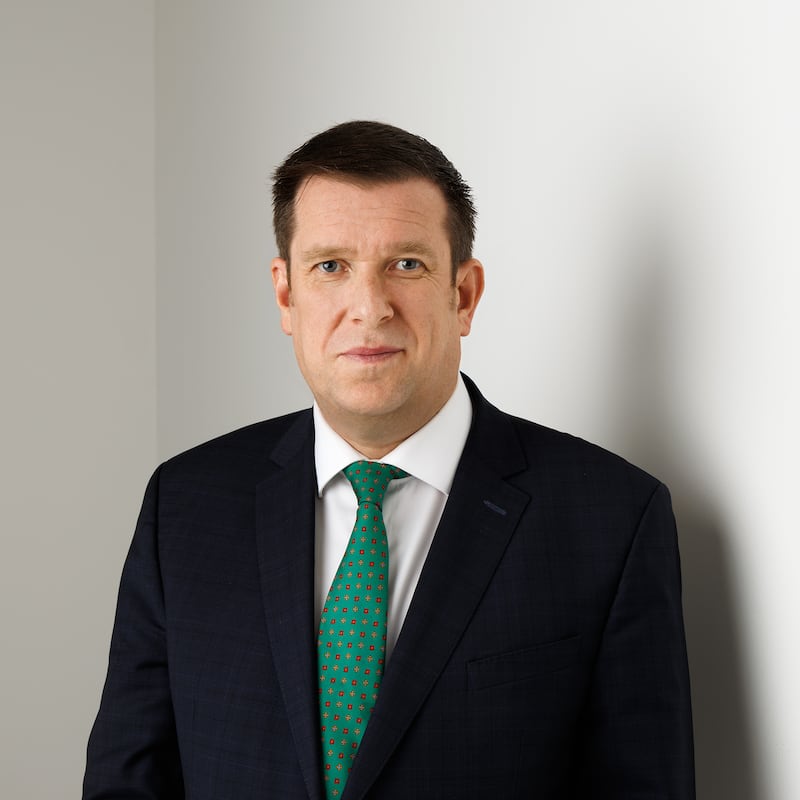
“Food and drink already account for approximately 34 per cent of tourist spending in Ireland, which highlights how central hospitality is to the visitor experience and to local economies and communities. Restaurants, cafes, pubs and food producers across the region and nationally will all benefit from increased visitor numbers and international exposure.
“Ireland will effectively receive days of worldwide television promotion showcasing our tourism offering. The long-term value of that exposure cannot be underestimated.”
In simple terms, the event at Adare Manor hits all sorts of sweet spots across visitor spending, impact on regional businesses, jobs in the hospitality sector and global tourism promotion.
The State is all too aware of the need for such events to be backed by more than just optimism. In the Government’s Major International Sports Events Policy and Strategy Framework, it says: “Hosting a major international sport event has the potential to deliver a range of benefits and opportunities, while simultaneously having the potential to be costly and risky. Even those with potentially very favourable returns on investment can have considerable negative impacts if they are poorly assessed, planned and/or executed.”
The framework shows an element of awareness around the challenges that come with bidding for big sporting events. While one county councillor, who also happens to be a wrestling promoter, spoke of the desire to bring WrestleMania to Ireland in recent months, the Government won’t bid for anything on a whim.
The goal is to balance the economic and tourism return along with the sporting and social impact.
“Major international sporting events can deliver significant economic and reputational benefits for Ireland, particularly in areas such as tourism, hospitality and international connectivity,” says Aebhric McGibney, director of public affairs at Dublin Chamber.
“To maximise these opportunities, it will be important that investment linked to events such as the Ryder Cup and Euro 2028 delivers a lasting legacy through improved infrastructure, transport and wider economic benefits for businesses and local communities.”
It’s not just major events. Attracting high-volume-participation events to Ireland has been a cost-effective strategy for the Government for some time. This often goes outside of sports heavily associated with this island but that have strong participation numbers all the same.
There have been some clever uses of this strategy in recent times where the cost was relatively low but with guaranteed high numbers of visitors due to the participating teams and support alone.
Ireland hosted the world U21 lacrosse championship in 2022, the European flag football championships and part of the women’s softball World Cup in 2023, and the women’s European U20 volleyball championships in 2024.
In August, athletes from more than 100 nations will come to Ireland to compete in the Obstacle Course Racing world championships in Limerick while Dún Laoghaire will host sailing’s ILCA 6 and 7, formerly known as laser radial, world championships.
As these competitions attract international visitors they also create a learning curve for event organisers on the ground, affording experience of global-standard events. In advance of Adare Manor next year, having so many experienced event professionals and hospitality talent in the Limerick area alone will be invaluable.
That’s vital to maximise the total spend in Ireland when it comes to hosting major sporting competitions. Everything that can be done to enhance the visitor experience and learn from past events will add to the value they create.
Neither the Ryder Cup, for all of the money that will be spent, nor Euro 2028 are likely to pay for themselves, but they offer a chance to bolster an already important part of the tourism economy.
“The key for Ireland will be everyone working together to ensure visitors experience the very best offering this country can provide. We in the food-led hospitality sector are doing our utmost to make sure we get this right and deliver the high-quality experience and céad míle fáilte welcome that Ireland is renowned for internationally,” says Cummins.
“The main risks that need to be managed are infrastructure capacity, transport connectivity, accommodation supply and ensuring the economic benefits are spread as widely as possible across communities and regional economies. It is essential that visitors attending an event of this scale have a seamless journey from arrival to departure.”
The reality of the challenge of Adare Manor is already being tackled, with plans to open a temporary train station to help manage visitor movement.
Even if this is addressed well and all the visitors leave happy, working out the actual value of such events to the economy can be tricky. The maths for the metrics is, at best, messy, but the previously mentioned policy framework gave some indication of what success looks like from the consultation that was conducted for it.
It found that more than 58 per cent of valid consultation respondents believed a combination of non-financial returns and financial revenues should be considered when assessing State investment in big events. A further 30 per cent pointed to citizen happiness from attending big events, while just 12 per cent said investment should have to show a positive financial return.
This blend of reactions is useful to consider when assessing what the taxpayer considers as value for money. The gains must be measured on the profit-and-loss accounts but not just there.
The Ryder Cup and Euro 2028 will justify public support if the return is measured honestly and the benefits are felt long after the final putt is made or goal is scored. The infrastructure improvements that should come with these events, along with the tourism boosts, are vital if they are to be considered real successes.


