Main points
- A solar eclipse took place across western Europe today. The sun was obscured by the moon over Ireland, Iceland, the UK, France, Spain and Portugal
- A total eclipse – where the moon fully blocks the sun – could be seen in western Iceland, northern Spain and the Balearic Islands
- The eclipse was visible in Ireland from about 6pm until 8pm and peaked between 7pm and 7.45pm
- Members of the public were advised to never look at the sun with the naked eye, even with sunglasses on
Key reads
- Everything you need to know about today’s solar eclipse
- The growth of dark sky tourism in Ireland as enthusiasts prepare for eclipse
- ‘Thousands of special viewing glasses’ sold in Ireland ahead of eclipse
- Eclipse could help Irish scientists solve a mystery of the sun’s heat
- Doctors warn over increased risk of permanent eye damage during solar eclipse
We’re going to wind down the live story now.
Thanks for staying with us throughout the day. We’ll see you in 2090!
Even Dublin’s seagulls took a moment to pause
Frank McNally was among the sky-watchers in Dublin. Here is his take on a special evening in the capital:
Temperatures dropped. Birds stopped singing. Even the seagulls of Dublin briefly suspended their missions to steal chips off tourists and rip refuse sacks apart.
Perhaps they were as much spooked by the spectacle of so many humans gazing skywards in strange glasses as by the sudden gloom.
Whatever the reason, the gull too took a moment for apparent reflection, as if wondering: what’s it all about?
Read the full article here.
Here is a round-up of the best photos of the eclipse from Ireland.

Thousands watch rare solar eclipse over Ireland
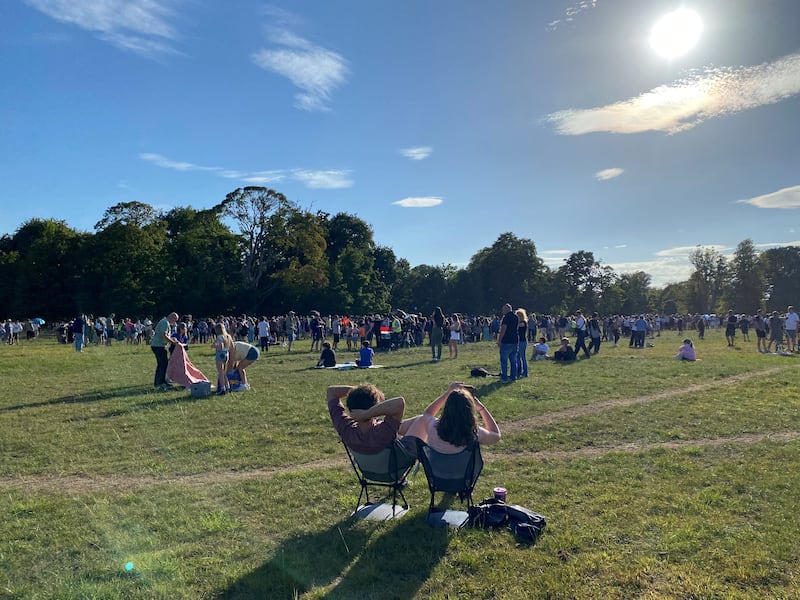
Thousands of people gathered across the island of Ireland to watch a rare partial solar eclipse.
One of the biggest gatherings was at Phoenix Park in Dublin where huge crowds came out to experience the once-in-a-generation astronomical event.
Crowds also gathered at Queen’s University in Belfast for a watch-along event under cloudy skies, as well as at the Armagh Observatory and a number of other locations.
In Phoenix Park, crowds cheered and clapped as the skies darkened at the moment the moon covered the sun.
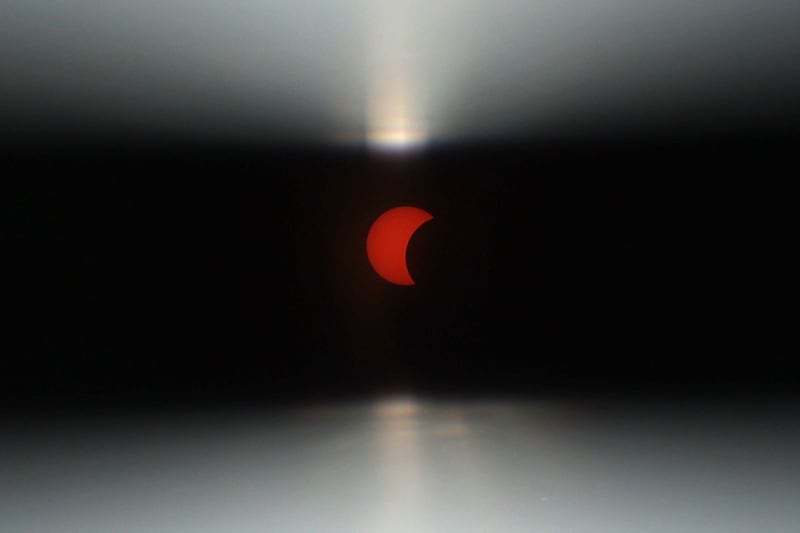
A telescope had been erected to give people a safe view of the eclipse while others brought their own homemade viewing devices fashioned from cereal boxes.
Colm Healey, from Dublin, said he came because it would be the only chance in his lifetime to see the rare celestial event.
He said: “It is great to see the crowds here and so many people that are interested. I have got my eclipse glasses so I’m well prepared.”

At Croke Park in Dublin, crowds watched the eclipse before the friendly football match between Manchester United and Leeds United.
Two enterprising stewards had brought along welding masks to watch the eclipse safely.
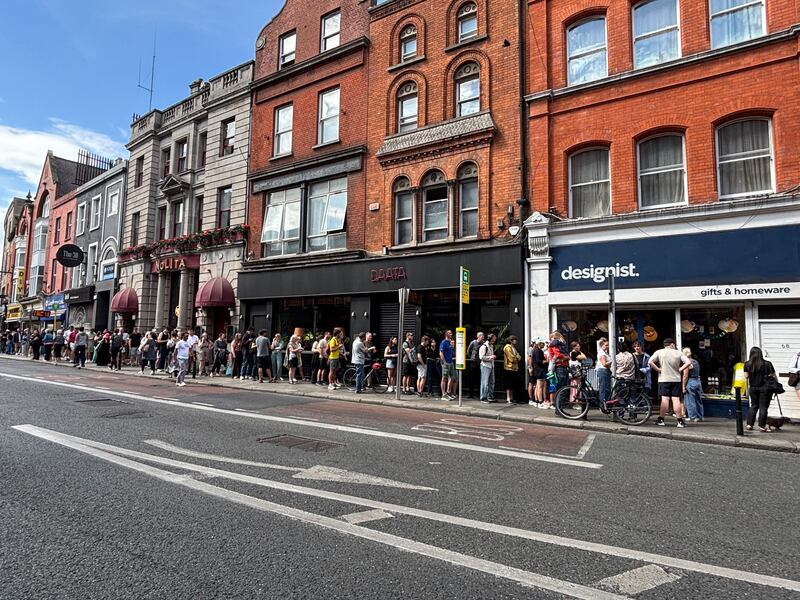
Earlier, hundreds of people brought South Great George’s Street in Dublin city centre close to a standstill as they queued to buy glasses to view the eclipse.
Meanwhile, the solar eclipse also generated excitement in Co Armagh as families gathered to observe the “remarkable astronomical event”.
The director of Armagh Observatory and Planetarium, Professor Michael Burton, said visitors feel part of the “cosmic happening”.
Armagh Observatory joined those in Dunsink in Dublin and Blackrock Castle in Cork in organising viewing events.
“We’re having one of these remarkable astronomical events, which tells us that we live on a spaceship – spaceship Earth – and it’s travelling around our solar system,” Burton said.
He said the planetarium in Armagh was “packed out” in anticipation of the eclipse.
“It does remind us that we are a small part of the universe, and this is a cosmic happening out there, and we are part of that.” - PA
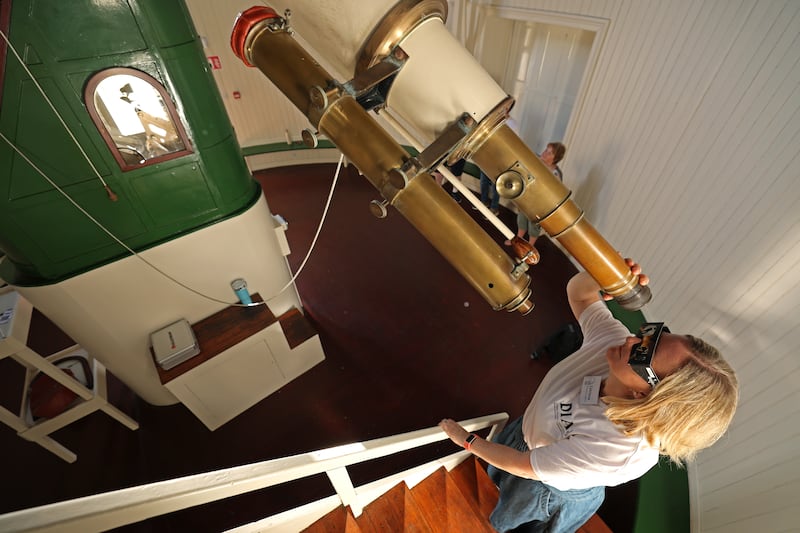
Observing at the observatory

Dispatches from Sagres
Our consumer affairs correspondent Conor Pope watched the eclipse in Sagres, Portugal.
Here is his rundown:
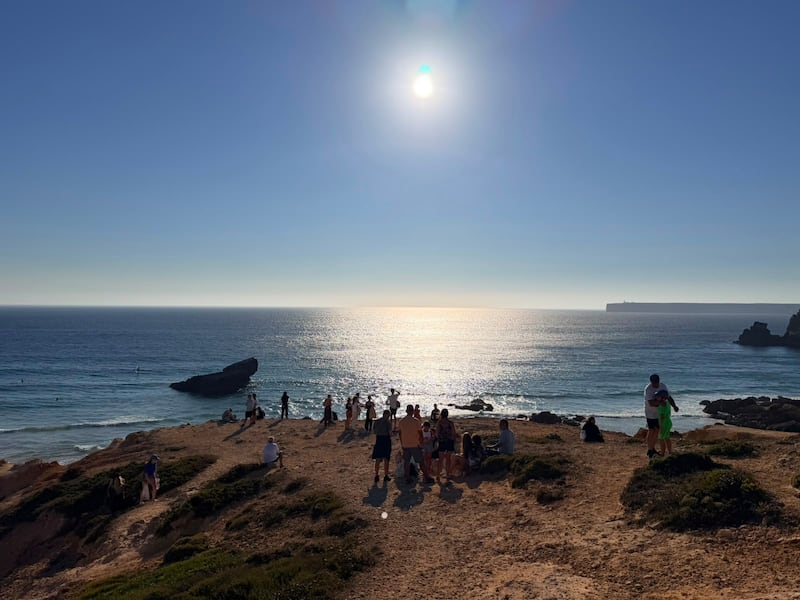
Hundreds of people gathered on the cliffs around Sagres on the south-western fringe of the Algarve to watch the solar eclipse unencumbered by so much as a wisp of a cloud.
While some parts of north eastern Portugal experienced a total eclipse, those watching further south had to make do with around 94 per cent of the sun being blocked out
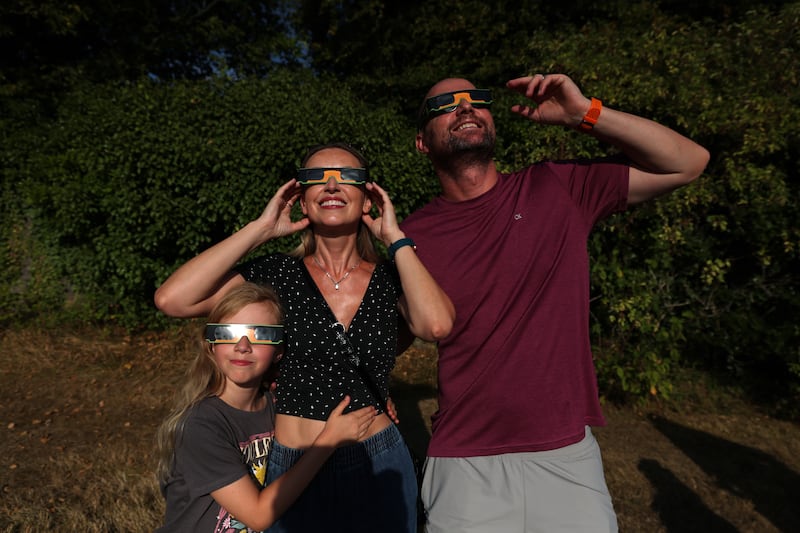
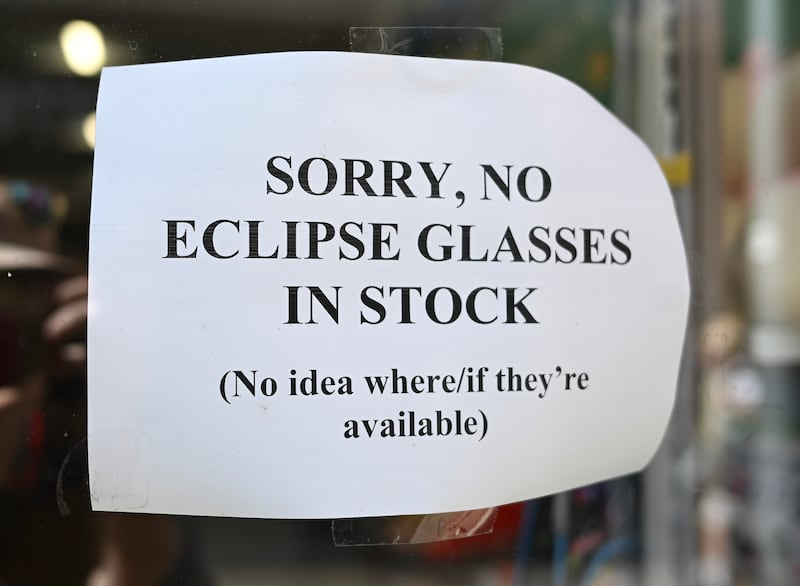
Some of those who travelled to one of the most popular vantage points along the southern Portuguese coast came with the regulation eclipse sunglasses which, as in Ireland, have been almost impossible to get since the start of the week.
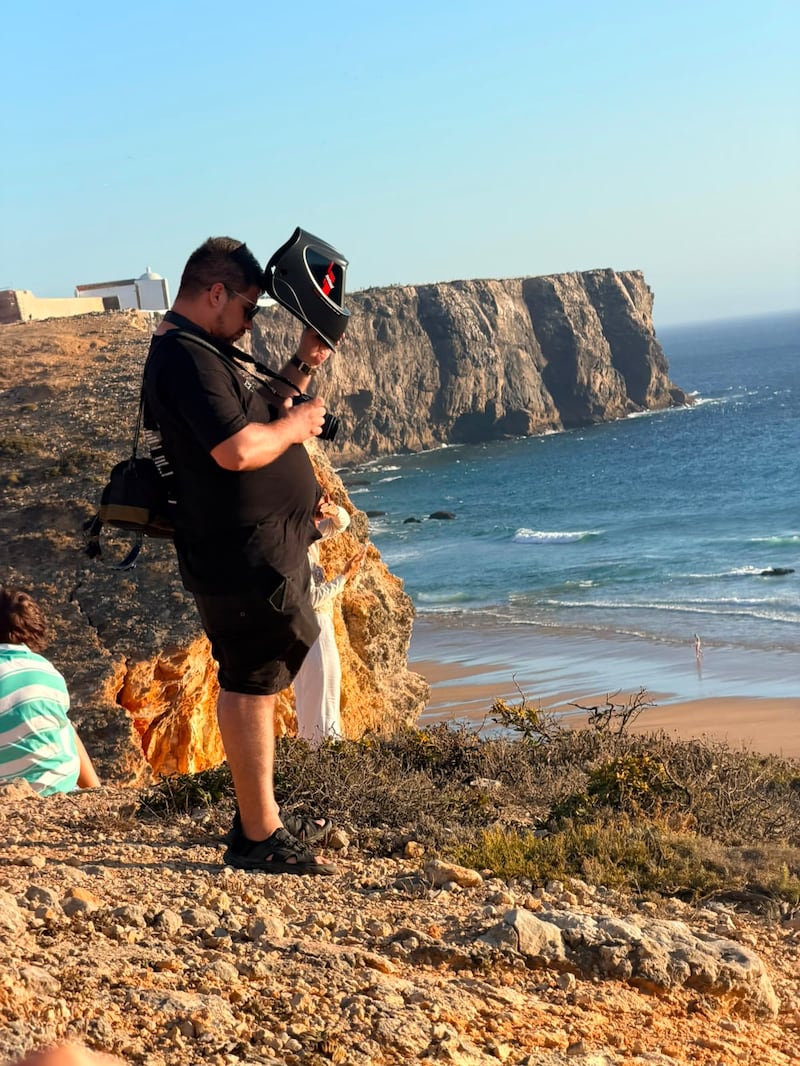
There were others who had fashioned crude looking devices from boxes of cereal, while one man had brought a full welder’s mask and was using it to take pictures of the solar phenomena and steal glances at the sun.
Then there were those who were using intermeshed fingers to stare at the sun in an ill-advised fashion and the unpopular man who briefly flew a small whining drone above the heads of eclipse watchers before being forced to retreat in the face of baleful stares from those who had travelled to the area to experience the phenomena in something close to tranquillity.
Given the path of the eclipse, Sagres was one of the last places in Europe to see the moon pass across the sun but at exactly 6.42pm local time, it took its first gentle nibble, drawing oohs from the adults with the glasses and shrieks of delight from young children.
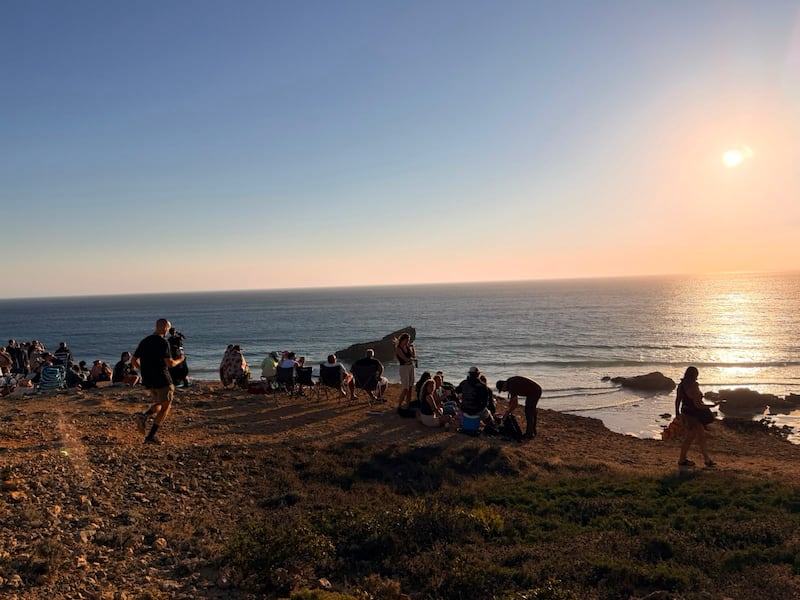
By 7.30pm, the temperature on the cliff edge had fallen perceptibly and the wind had picked up while the previously shimming sunshine had dimmed dramatically, taking on an almost alien quality, a soft orange hue that would not have been out of place in a science fiction blockbuster.
As the darkness deepened, dogs whined and pawed at the ground anxiously confused by the suddenly shifting light. Meanwhile, a handful of windsurfers exploited the frothing waves seemingly oblivious to the wonders happening above.
At 7.38pm, the eclipse reached its apex with the moon making the sliver of sun smile down on an awed audience below.
Almost immediately the canniest of the locals started packing up their deck chairs to beat the traffic heading back towards the most popular resort towns to the east.
From solar glasses to cereal boxes


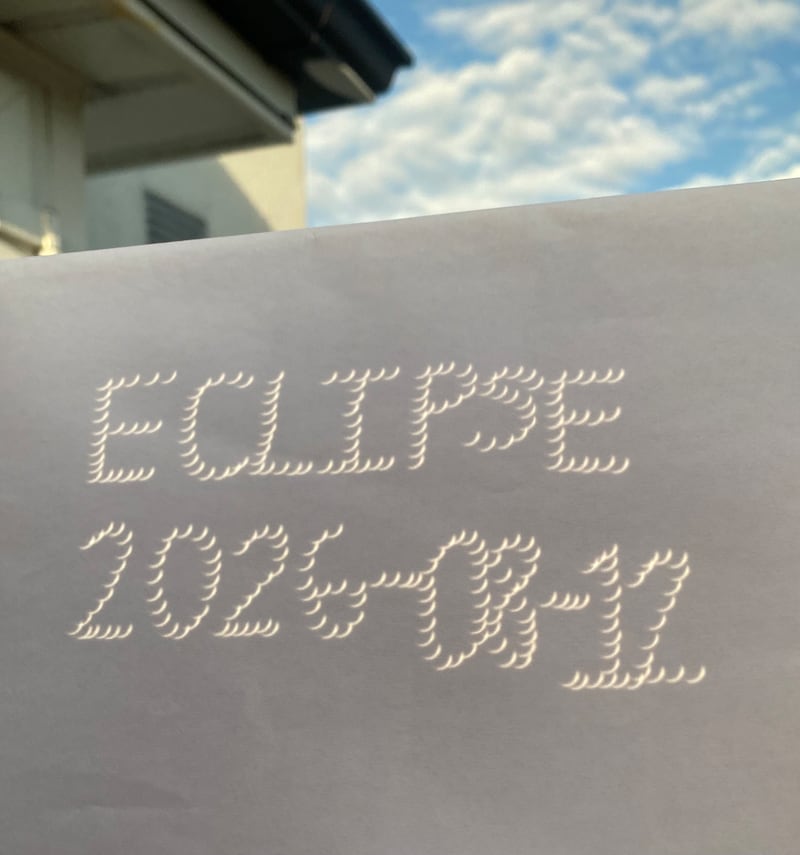
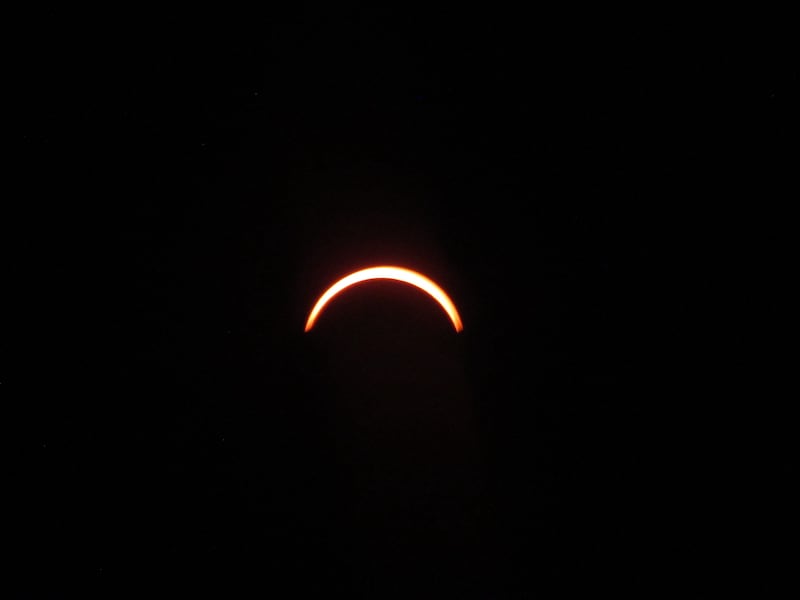
‘Just like at dawn and sunset, totally deceiving your brain’
Spectators across Spain watched in wonder, some whipping off their protective glasses and rising to their feet in unison, as a rare total solar eclipse swept across the north of the country on Wednesday evening, plunging it into darkness.
Spain deployed a massive police contingent and set up special viewing spots across rural areas that offered the best views of the spectacle.
Viewers in Buitrago de Lozoya, a rural district north of Madrid, clapped and cheered as the sky dimmed and Baily’s beads - bright points of sunlight that shine around the edge of the moon during a total eclipse - glistened on the horizon just after 8.30pm local time (7.30pm Irish time), lasting barely a minute.
“It’s impressive how the colours return little by little after totality - first the reds, then the blues - just like at dawn and sunset, totally deceiving your brain,” said economist Diego Fernandez (32).
Rafael Jiménez (50), a resident of Madrid, said the event felt like science fiction. “It was an absurd scene; we even got soaked when the garden sprinklers kicked in,” he said. “And then, just like that, we were watching the sunset again.”
Spanish authorities dispatched 25,000 police officers to guarantee security around eclipse observation sites and deployed nearly 100 planes and helicopters.
In Iceland, glasses that allow spectators to view the phenomenon without damaging their eyes have been sold out for days, as the country of roughly 400,000 people welcomed up to 80,000 visitors.
The total eclipse reached Iceland’s westernmost coast at about 5.44pm pm local time (6.44pm Irish time), casting the far west of the island nation into total darkness for up to 2 minutes and 13 seconds. - Reuters
Images from Europe
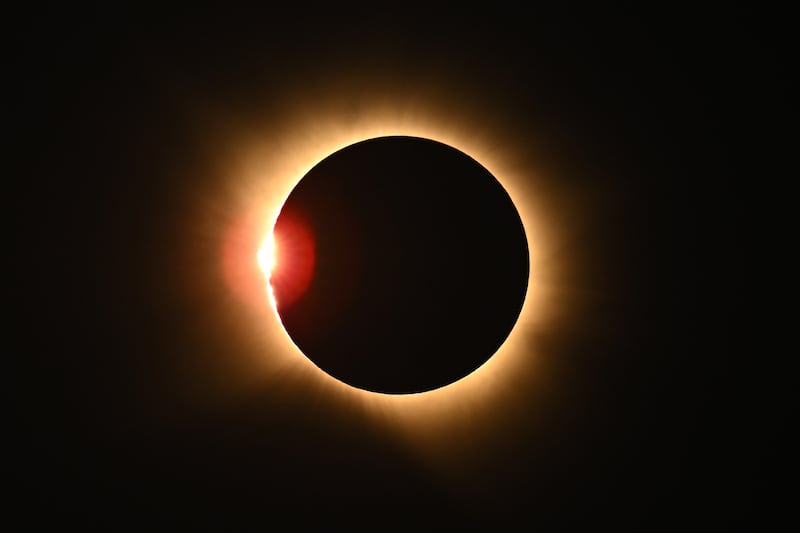
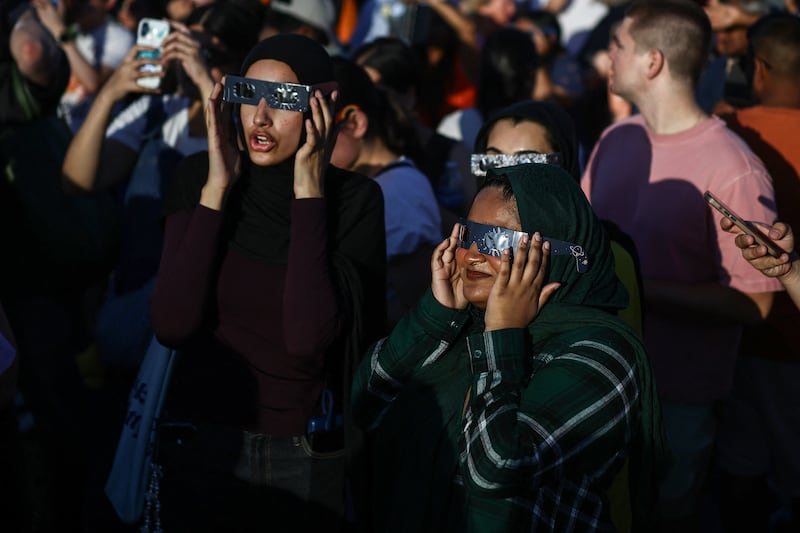


Dispatches from Dublin
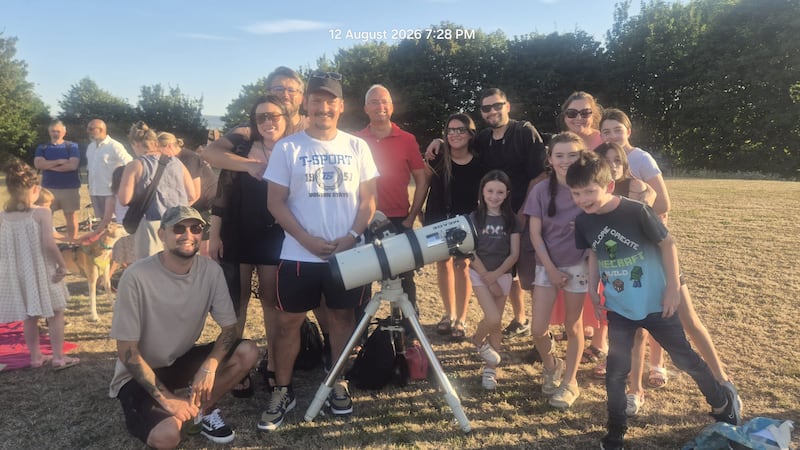
It was a festival atmosphere in Eamon Ceannt Park, Sundrive Road in Dublin 12 this evening, Claire Murphy reports.
About 200 people climbed the mound at the edge of the park to experience the solar eclipse. Equipped with cereal boxes, tin foil, welders helmets and a lucky few with special glasses, there were many ingenious ways to experience the unique occasion.
A group from Sundrive Astronomy Club had set up a Newtonian telescope, which drew a large crowd.
Ramses Jerez Nicurcar studied astrophysics in Valparaiso, Chile before moving to Ireland two years ago.
“The weather in Ireland is sometimes unpredictable and actually the forecast for today was for cloud, but look at the blue skies ... it’s beautiful,” he said.
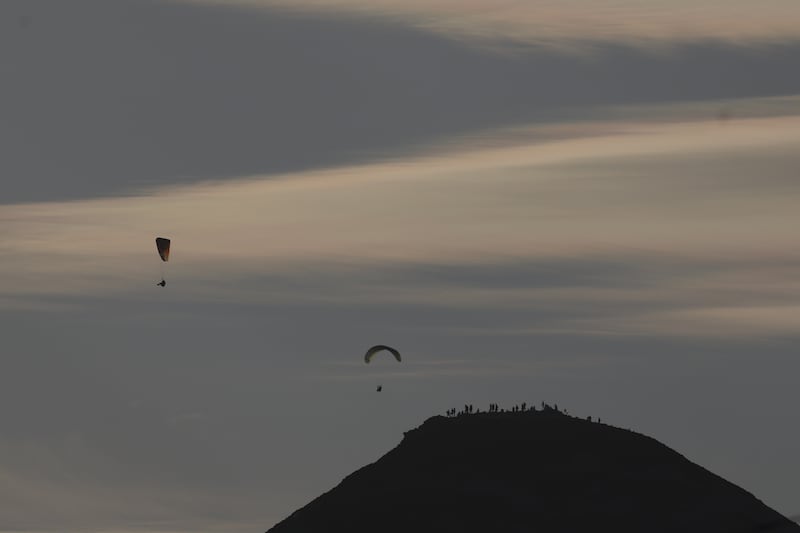
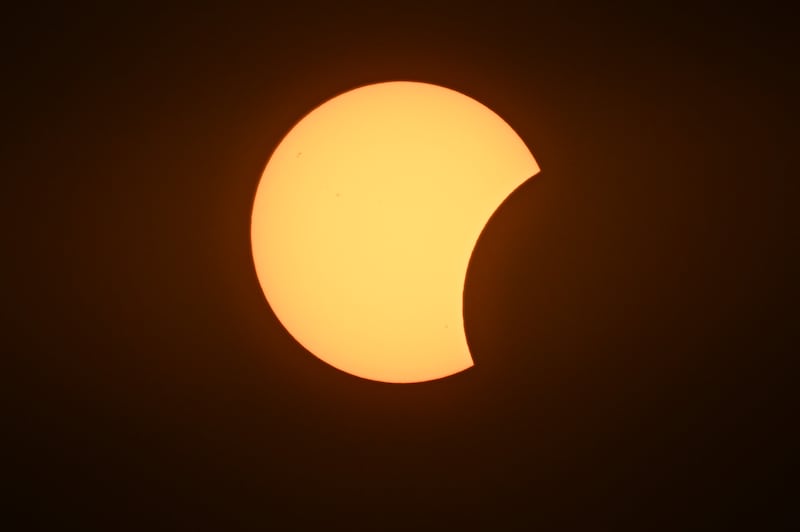
Your eclipse photos
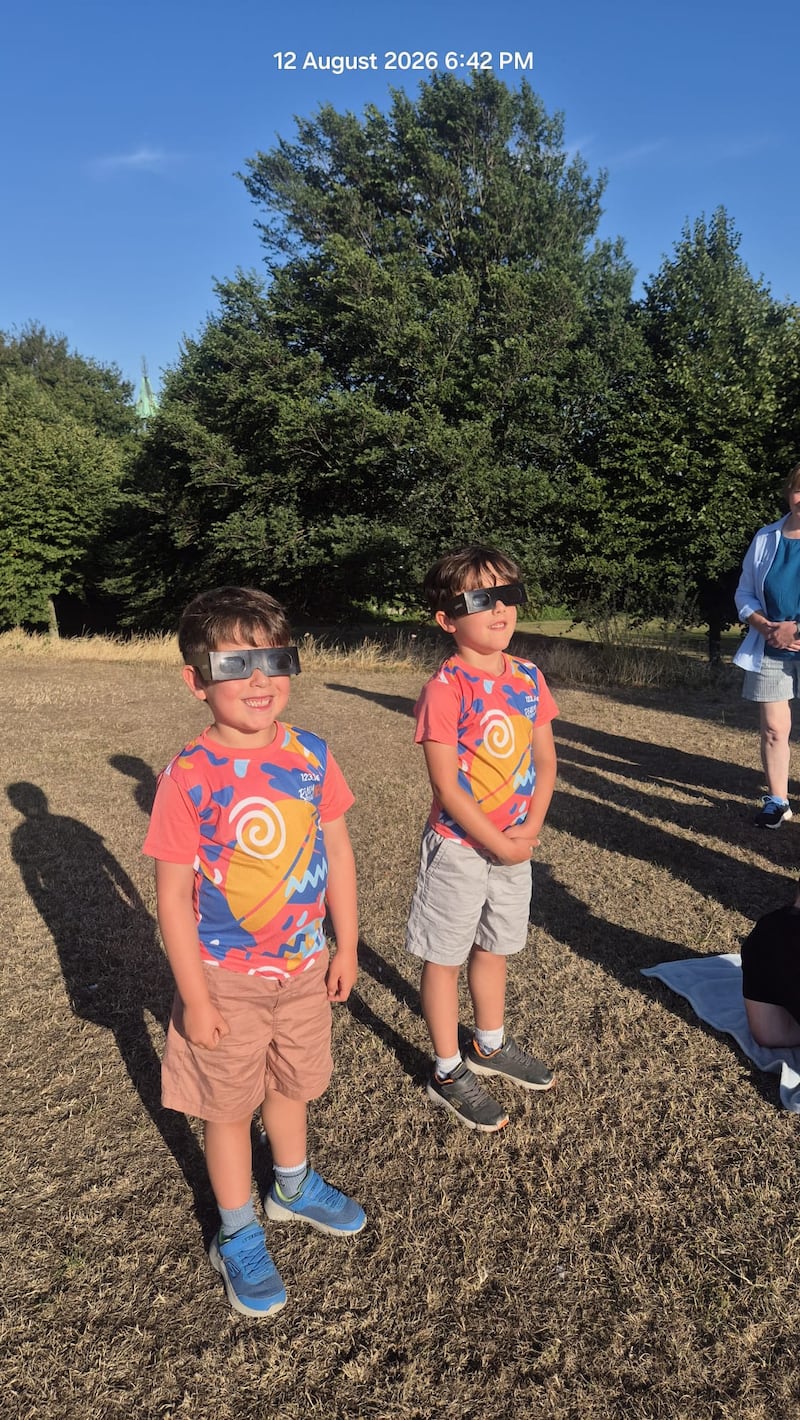

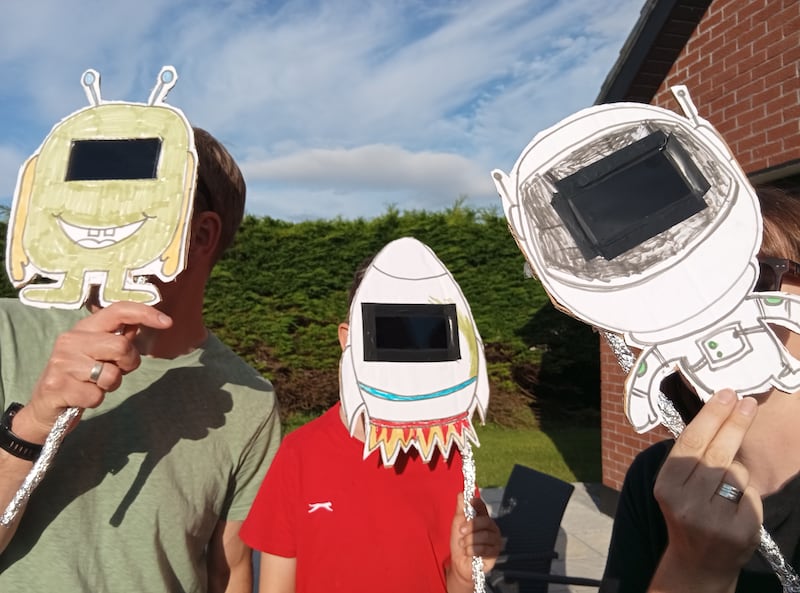

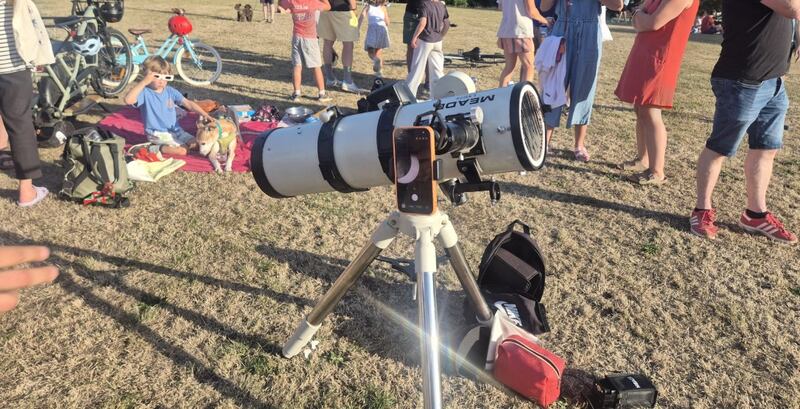


Watch live here
Dunsink Observatory is livestreaming the eclipse here.
Eclipse-hunting at ‘end of the world’
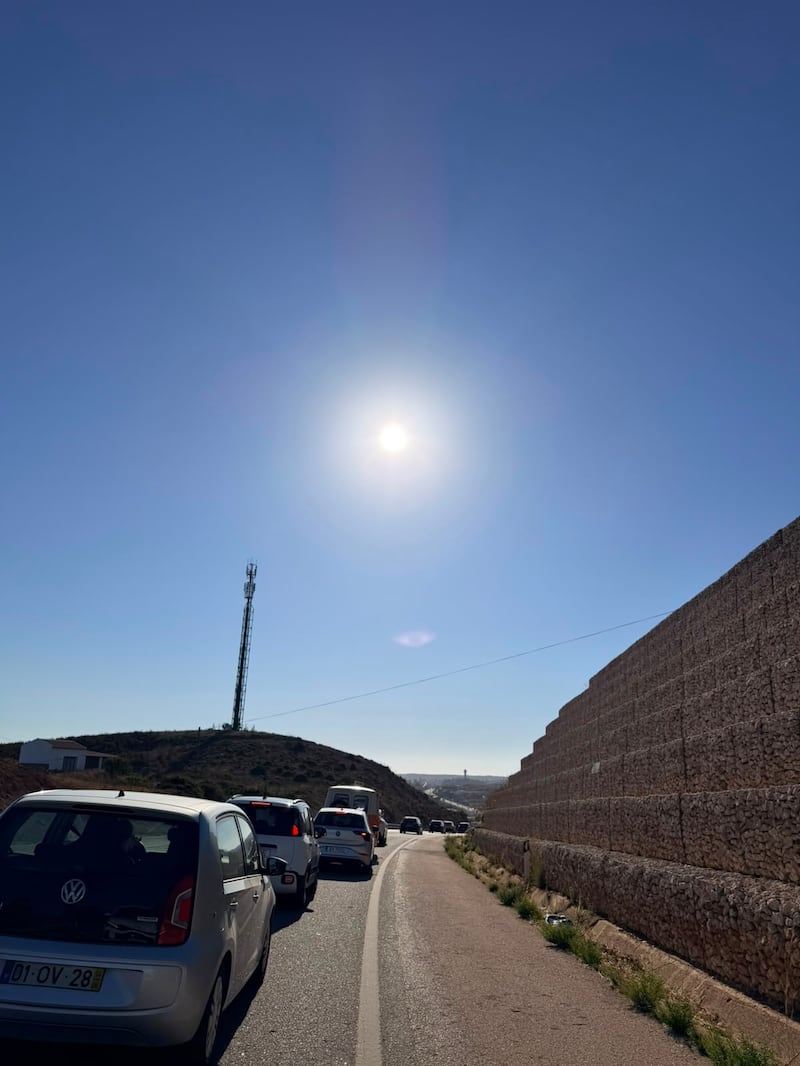
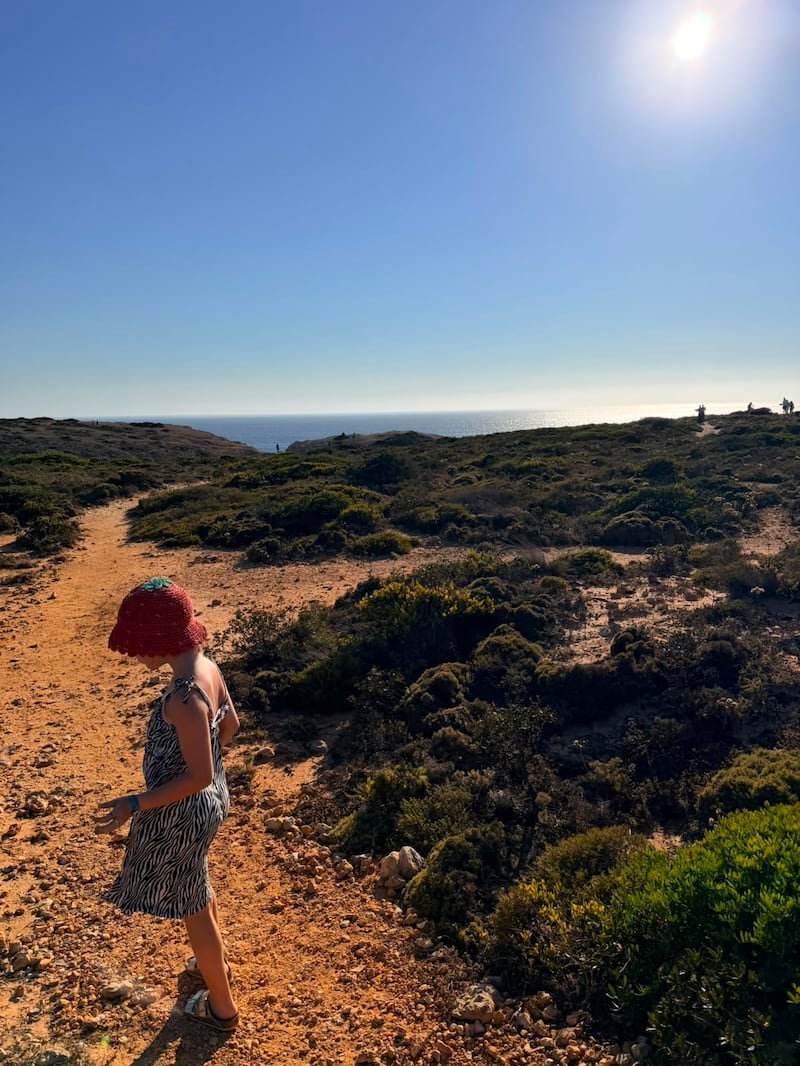
Our consumer affairs correspondent Conor Pope has found a prime viewing spot to watch the eclipse in Portugal.
He has landed in Sagres – known locally as the end of the world – after surviving a traffic jam with others who had the same idea.
Doctors warn over increased risk of permanent eye damage

The public have been warned of the “permanent damage” that can be caused by looking directly at the sun, especially during an eclipse, Sarah Burns writes.
Gerry Fahy, consultant ophthalmologist and president of the Irish College of Ophthalmologists, said it was important for people to be aware of the permanent damage that can be caused by looking directly at the sun with the naked eye, especially during an eclipse.
“Staring directly at the sun can permanently scar the retina and cause irreversible loss of central vision,” he said.
Eye safety is paramount if you plan to take a look at the near-complete eclipse, as the fraction of sun remaining mid-eclipse is still unsafe to stare at directly without taking proper care.
Here are some practical tips on how to keep your eyes safe.
Views best in southeast of country
People in the southeast of the country have the best chance of viewing the eclipse this evening, Met Éireann forecaster Gerry Murphy said.
“The eclipse will begin around 6pm and will end around 8pm. The peak coverage of the sun will be between about 7pm and 7.15,” Murphy told RTÉ Radio’s Drivetime.
“The peak coverage of the sun will be in the southwest of the country, but the best place to view it will be in the southeast of the country because that’s where the most sunshine is.”
Murphy advised people to use appropriate eyewear if observing the eclipse.
“This is not an area that I’m an expert in, but people should take the advice not to look directly at the sun,” he said.
“It was also advised not to look through sunglasses or welding goggles or any of those things. It’s best to have the correct eyewear for looking at the sun and not to be relying on other eyewear.”
More information on how to keep your eyes safe during the eclipse can be read here.
The growth of dark sky tourism in Ireland

In a world of screens and urban haze, more people are finding something restorative in the act of staring up at an unblemished, uncompromising night sky, Cian O’Connell writes.
Three sites in Ireland boast “dark sky status”, meaning they have been officially recognised as reserves for nocturnal darkness, free from artificial light pollution thanks to their location and the help of their communities.
The three locations in Kerry, Mayo and Tyrone will have a particular advantage when people are trying to view the partial solar eclipse today. But Ireland’s dark sky locations are more than a one-day wonder.
Read all about the growth of dark sky tourism here.
How animals behave in a solar eclipse is extraordinary
While we await the main event, have a read of Kathy Sheridan’s latest column. She discusses how humans – and animals – act during an eclipse.
“Eclipses were recorded in ancient Egypt as long as 4,500 years ago, yet our ancient Irish ancestors were way ahead of them, according to Irish archaeoastronomer Paul Griffin. The world’s oldest known solar eclipse, he has deduced, was recorded in stone by Irish Neolithic astronomer priests more than 5,000 years ago in Loughcrew, Co Meath, in a passage tomb older than Stonehenge and the Great Pyramids of Giza.
Griffin’s claim is contested but it reflects an age-old fascination with a rather spooky celestial phenomenon.
“Shakespeare’s multiple references to eclipses represent them as cosmic portents of chaos, evil, betrayal and societal breakdown. Perhaps our approach is more muted not just because of the weather but because we ingested some of that Shakespearean dread. And maybe he was on to something.”
Read the full article here.
We’re an hour away from the partial solar eclipse beginning over Ireland.
The eclipse will start at around 6.09pm in the north of the country and slightly later further south. Mid-eclipse will occur between 7.07pm and 7.13pm, and the eclipse will end just after 8pm across the island.
Astronomy enthusiasts are gathering at viewing events across Ireland and abroad.
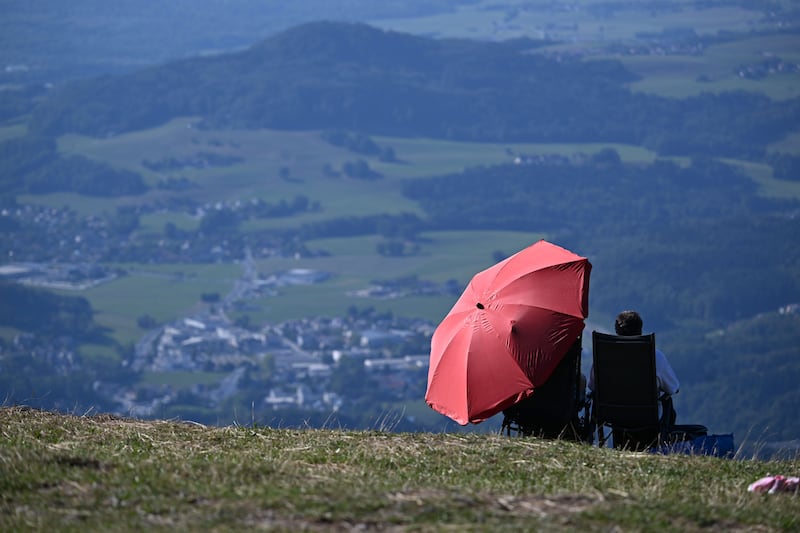
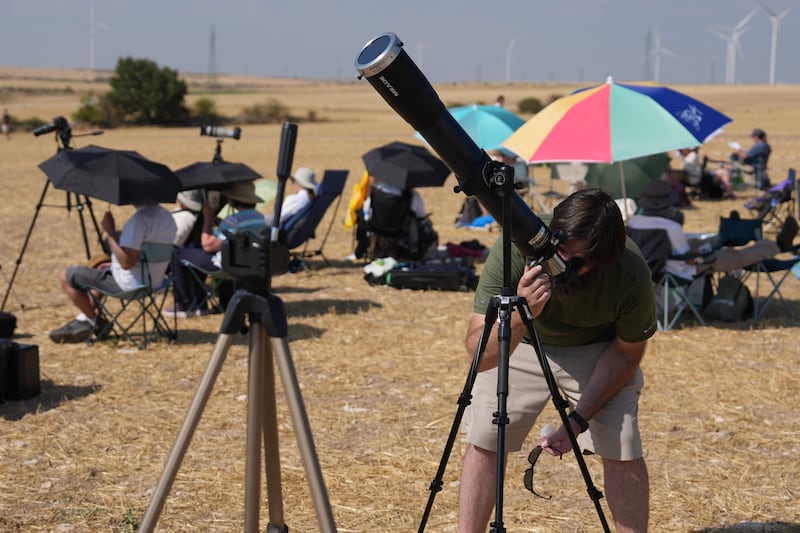
‘I think will have to watch it on the television instead’
Our consumer affairs correspondent Conor Pope is in Portugal patiently waiting for the eclipse.
Here’s his report:
Eclipses on the Algarve’s beach of light are like buses. People wait decades for one and then two come along at once – or at least two will come along separated by less than a year.
Today’s solar spectacle will be to the north but will be eclipsed by a similar and even more spectacular event early next August which will pass to the south of the sun-kissed stretch in the south of Portugal.
Like much of Europe, the small town of Praia de Luz – or beach of light – has suddenly become eclipse obsessed.
More than three hours before 94 per cent of the sun starts getting blocked out by the passing moon, a healthy crowd has gathered on the beach although most do seem focused on soaking up the tanning rays of the sun rather than celebrating its temporary dimming.
The rare as hen’s teeth eclipse glasses were peaking out of a handful of beach bags dotted along the roasting hot sand.
Just like in Ireland demand for the cardboard-framed blacked out lenses soared here over the course of the week with long lines forming outside and pharmacies in the town.
Many people were left without.
“I won’t be able to watch it,” the barista in a hipster coffee shop in the town told The Irish Times. “I wasn’t able to get a pair and apparently this eclipse will be even more dangerous than most. I think will have to watch it on the television instead,” he concluded mournfully.
Anyone on the beach planning to wait for eclipse to come to them glasses or no glasses – might be similarly disappointed.
ChatGPT confidently asserted that the best views would be available on the beach but locals know better and have warned that by the time the eclipse actually happens the sun will have moved around the headland.
That means that The Irish Times is now going in search of a better viewing point.
While the Algarve is on the same peninsula where the path of totality passes, it is still around 770km away from where the real magic is happening and when it comes to eclipses every kilometre counts.
Portugal’s stretch of total darkness is going to be restricted to a small area in the northeast close to the town of Bragança.
But even so the excitement has been building all day.
Some of the hardier watchers have trekked close to 5km up the hill to the north of the beach to the obelisk offering the best views of the moment while others – including this writer – have yet to settle on a spot although Sagres, which is known as the end of the world, seems like the best bet
Those lucky enough to have their eclipse glasses at the ready will do well to hang on to them as on August 2nd next year another even more dramatic solar event happens although it will remain tantalisingly close to total.
Southern Spain will experience a total eclipse while Luz and the Algarve will see 98.4 per cent of the sun blocked out in the morning which will make it dramatically darker although corona and diamond ring will be missing.
On the ground waiting for the eclipse in Spain
Irish Astronomical Society’s journal editor John Flannery, who wrote the analysis of the coming eclipse for The Irish Times here, is one of the many Irish people who has travelled to Spain to watch the total eclipse.
This will be his seventh time watching a full eclipse and he says that even with 99 per cent coverage does not prepare you for the majesty of a full eclipse.
John is currently in Logroño in the Rioja wine region of Northern Spain waiting for the full eclipse.
The forecast there is for completely clear skies and totality will last one minute and 20 seconds.
He is with a niece and two physics teachers from Dublin.
“I was in Zaragoza last night and they are doing a big concert there and people will have a view from the plaza of the eclipse. It should be quite dramatic,” he said.
“I was down in Teruel and they were preparing for the eclipse too.”
Many have relocated from Zaragoza because of the possibilities of thunderstorms in the region during the eclipse.
The Spanish authorities have closed off many forested areas, he says, because of the risk of forest fires starting.
Big match in Croke Park to coincide with eclipse
Tonight’s match between Manchester United and Leeds United at Croke Park is historic for two reasons.
The first is that there will be the largest crowd ever to attend a football match in Ireland for the Boyles Sports Cup with a full attendance of 82,000.
The second is that the game will start when the eclipse is still going on. The maximum contact in Dublin is at 7.13pm and the eclipse will end at 8.03pm just before half-time.
The Leeds United fans on Hill 16 will have the best view of the eclipse as they will be facing west.
Here’s a preview of the game.
Where best to watch the eclipse?
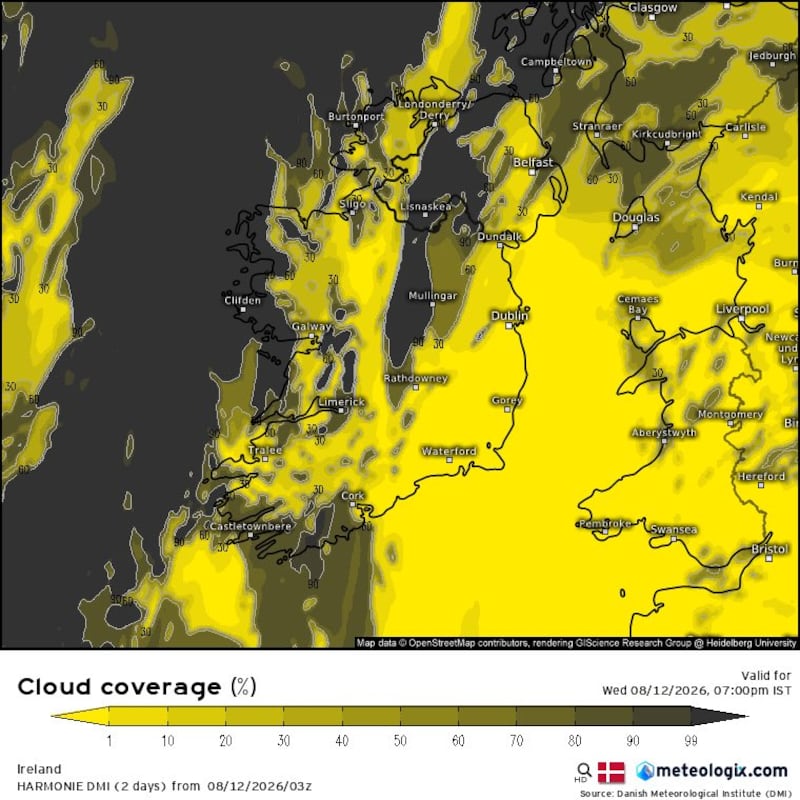
The critical issue this evening is the level of cloud cover. The good news is that the sun is still relatively high in the sky and can shine through thick cloud cover, but it depends on the level.
As it stands the southeast looks like having completely clear skies this evening and Dublin and north Leinster also look good for complete or unimpeded views of the eclipse at maximum contact.
Unfortunately, the situation doesn’t look as good in Cork or Kerry which will have 98 per cent eclipse coverage. The dark shadows on the preceding map look like there will be almost total cloud cover at the critical time.

‘Thousands of special viewing glasses’ sold

David Moore, editor of Astronomy Ireland magazine, has said those planning to view the eclipse should check Met Éireann satellite images to see which way clouds are moving.
Moore said the Astronomy Ireland website was “selling hundreds of eclipse glasses a day” last week ahead of tonight, and the number of pairs shipped to customers was “in the thousands already”.
Solar eclipse chasers flock to Spain in search of best viewing point
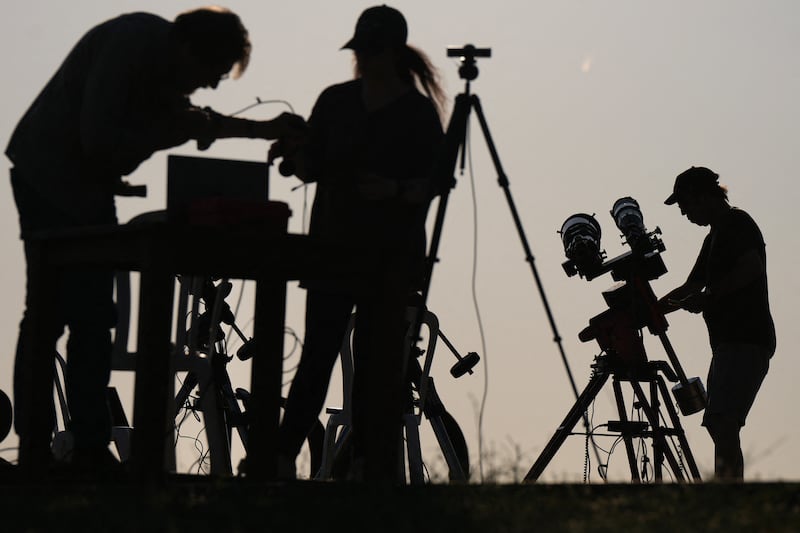
The online forums are abuzz as people debate potential cloud cover and trade tips on the best viewing points.
Hours before wide swathes of Spain were set to experience the country’s first total solar eclipse in more than a century, the excitement was palpable.
“It’s going to be spectacular,” said César González, an astronomer and science communicator at the Madrid Planetarium.
“A total solar eclipse is one of the best spectacles in nature.”
How to capture the solar eclipse – without frying your phone
Planning on watching the solar eclipse that will take place later today? Excitement about the event, which is the most complete solar eclipse we will see until 2090, is high. Instagram and TikTok are bound to be full of photos and videos of the event.
But if you are planning on capturing it on camera, you need to take precautions – or risk damaging your camera or phone permanently.
Nasa has some advice for people who want to capture a solar eclipse: use a filter. On a digital SLR camera, or if you plan to take extended footage, you will need a special solar filter to protect the camera that conforms to the ISO 12312-2:2015 standard, which also applies to eclipse glasses.
If you are using your phone though, you can fashion one from a set of eclipse glasses – assuming you have spares – cutting it out from the cardboard frame and covering the camera lens completely.
[ How to capture the solar eclipse – without frying your phoneOpens in new window ]
Are you watching the eclipse in Ireland? Share your stories and photos
Are you travelling to a good view point, or having a viewing party? Is this your first chance to see a solar eclipse from Ireland, or did you see the last one in 1999? Have you got the proper eye protection prepared?
The Irish Times would like to hear from you – feel free to share your eclipse photos and thoughts about the spectacle.
Frenzy in parts of Europe around the solar eclipse
Continental Europe’s first total solar eclipse in decades will briefly turn day to dark across several countries on Wednesday, drawing armies of sky watchers.
The coincidence of Earth, the moon and the sun falling into perfect alignment – a fleeting celestial event known as totality – has created a frenzy in some parts of the Continent.
People are paying exorbitant hotel rates to be in the inner part, or umbra, of the lunar shadow. Along that path, if the sky is clear, the sun will seem to become a black disk ensconced in a hazy corona, surrounded by planets and stars.
In Spain, normally empty towns have filled up. Other people have trekked to far-flung North Atlantic destinations.
The eclipse will begin at about 6.08pm central European time (5.08pm Irish time) in the northernmost part of Russia, its shadow swooping over the Arctic Ocean, narrowly missing the North Pole. It will reach remote Greenland, then Iceland, where viewing parties are planned in Reykjavik for a totality that will last for one minute. It will then cut across Ireland and Europe including Spain, where totality will also occur.
Eclipses have seized the imagination since people began telling stories. In Homer’s Odyssey, the death of Penelope’s suitors is foretold with an omen that may have been a solar eclipse: “The sun has been obliterated from the sky, and an unlucky darkness invades the world.”
That strange moment of totality will be the main event Wednesday. Much light will go out of the sky and warmth out of the air. Currents may change. Birdsong and the buzzing of bees may stop. Stars and planets will snap into view, and pets may become upset.
The eclipse will begin with the moon seeming to cut into the sun and then, over about an hour, slide across its surface. Then comes the totality phase, which is brief – at most, just over two minutes.
Only then, in areas of actual totality, will it be safe to look up with the naked eye – otherwise, the sun can cause significant eye damage. Protective gear must be worn even in the darkest places when the moon starts to slide off the sun’s surface again.
In Spain, the Spanish National Organisation of the Blind has been distributing 1.7 million pairs of eclipse glasses, giving them away with the lottery tickets that it sells. – NYT
How to keep your eyes safe
Eye safety is paramount if you plan to take a look at the near-complete eclipse, as the fraction of sun remaining mid-eclipse is still unsafe to stare at directly without taking proper care.
However, practical and safe ways to watch the show unfold are described in a booklet at eclipse26.ie, compiled by Dunsink Observatory and ESERO Ireland.
Without taking proper precautions, there is a risk of permanent eye injury due to thermal retinal burn. Your eye’s retina has no pain receptors, so you are unaware as the harm is being done.
Read more here.
Eclipse viewing events
Several astronomy clubs and facilities countrywide have co-ordinated eclipse-viewing events with the details listed on their respective websites.
Dunsink Observatory sold all tickets for its event in four minutes and has a waiting list of 700. While the public gathers there, its director, Prof Peter Gallagher, will be on a scientific mission to film the eclipse on its path off the west coast of Ireland.
Other places hosting events include Ballycroy Visitor Centre in Mayo, Blackrock Castle Observatory in Cork, the Irish Astronomical Society (at the Phoenix Park Visitor Centre), the Irish Astronomical Association in Belfast and Midlands Astronomy Club.
Maynooth University has sold out its 450 tickets for a public viewing event, and there is a waiting list with hundreds more.
[ Solar eclipse in Ireland: When to watch, where to go and how to protect your eyesOpens in new window ]
Solar eclipse set to begin from 6.09pm this evening
The closest to a complete solar eclipse most of us are ever likely to see will occur at sunset on Wednesday, August 12th.
Circumstances will not be as good again for us until a total solar eclipse on September 23rd, 2090, which will again favour the southwest. Total solar eclipses in Ireland are incredibly rare; the last one was on May 22nd, 1724.

A total eclipse of the sun will miss Ireland by only a couple of hundred kilometres, and will be fully visible in parts of Portugal and northern Spain.
The partial solar eclipse will begin between 6.09pm in the north and a bit later the farther south you go. Mid-eclipse will be between 7.07pm and 7.13pm and will end just after 8pm across the island.


