
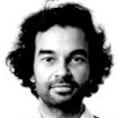
The title was too good for the author’s own good. The End of History: it had a definitive ring, and therefore travestied the subtler argument that came in the following hundreds of pages.
Francis Fukuyama, who has a memoir out, can be defended on another count. Even if he was wrong to assume the ultimate triumph of freedom circa 1989, he was usefully wrong. His thesis shaped and guided debate for decades. At the margins, it might also have had real-world benefits. The era of liberal hubris that he unwittingly fed probably swept people along who otherwise had illiberal instincts: who might, say, have opposed EU or Nato enlargement. People back the strong horse. He told them which one it was, accurately or not.
There are such things as great wrong ideas. The species owes much of its progress to them.
Take the Enlightenment notion that human beings are blank slates, that nurture forms them more than nature. It has been under scientific siege for a while. But what a civilising thing to believe. Public education, parenting advice, legal rights for minors: these developments rested, in part, on a view of children as so much pliable matter. Had the genetic determinists won out much earlier, would the welfare state have evolved quite as it did? What would be the theoretical backing for government intervention in childhood, besides Christian compassion? A scientist needn’t care either way, of course. The truth, not the social consequences of the truth, is paramount. But a private citizen can take a rounded view.
Niamh Flatley: Riverdance star who played leading role in troupe’s global success

Vincent Browne: Haughey loved Terry Keane. She made his life miserable

‘We all call him baby Jesus’: Welcome to Marty Morrissey’s Marty Party on tour in Alicante

Ger Loughnane: ‘I was on the verge of a massive heart attack, and there’d have been no coming back’

Sometimes, the idea is a noble lie: not strictly true, but conducive to good behaviour.
It is hard to think of a more useful kind of wrongness than Sigmund Freud’s. He is not always taken seriously in his own field. On the other hand, few non-artists have done more to affect art. His emphasis on the inner life led to – or at least justified – the introspective turn that writers and painters took in the last century. The digressive, stream-of-consciousness novel and poem bears his stamp. So does abstract expressionism and the colour field, which pretends to capture the painter’s otherwise inarticulate internal state. “We’re all of us influenced by Freud”, said Jackson Pollock, even if he went to a Jungian for his own needs.

There is at least a statue of Freud down the road from me. (When refreshment has been taken, I keep seeing it as Lenin.) Thomas Malthus gets no such respect. His memorial wall in Bath defends him touchily against the “misrepresentations of the ignorant”. His so-called “trap”, in which population growth outpaces food production, causing disaster, has inspired some kooks and even eugenicists over the centuries. But it also, in Charles Darwin’s own telling, helped to unlock the idea of natural selection. “We” get around the Malthusian trap by producing more output per person. Animals, unless they are planning to industrialise, can’t.
Of course, in the scientific method, wrongness is everything. Knowledge moves forward via the falsification of hypotheses. But a wrong idea can be transformative in less contained and incremental ways than that. Sometimes, the idea is a noble lie: not strictly true, but conducive to good behaviour. The world might come to see blank slate-ism and indeed religion in those terms. In other cases, the very crudity of the idea (“wrong” tends to mean “too simple”) can be mentally clarifying, even for people in a different academic domain. Nuance at all costs is admirable. It is also at times a creative dead end.
The problem – is “tragedy” too strong? – is that a burden falls on the wrong but great thinker. The social benefits of their idea are widely dispersed. The humiliation is theirs alone. At 73, Fukuyama seems to have a wry, knocked-about quality to him. It is strange that he isn’t bitterer. Since at least 9/11, he has been taken for a liberal naïf, often by people who know the offending book by its title alone. Had he not written it, or had he hedged the thesis into a fog of equivocation, would the world be better off? At the very least, my own profession might not have had such a useful intellectual framing device these past few decades. Beware the right and useless.
Copyright The Financial Times Limited 2026


