
Referendums, like certain forms of magic, are powerful in the right hands, but there’s also a good chance something can go wrong, as campaigners on various sides have found over the years.
Opponents of the Government’s planned changes to the triple lock on Irish neutrality had hoped to throw the matter to the people. The triple lock guarantees that no more than 12 Irish soldiers can be sent into battle zones without the permission of the Government, the Dáil and the United Nations.
The media was all set to scrutinise the gambit after receiving an invitation to a cross-party press conference this week.
The plan was to “utilise Article 27 of the Constitution to trigger a referendum” on the current triple lock legislation by making a “petition to the President”.
‘Politicians can be terrorised for half a dozen votes’: Conor Brady’s plan to reset Ireland

Learning to ski in Dublin: I’m sweating in borrowed gear with a dawning sense I can’t avoid mortification

Dublin shop closes after 57 years: ‘It got a makeover in 1972 and hasn’t been touched since’

TV guide: the best new shows to watch, starting tonight

The group involved included the guts of the coalition that helped send Catherine Connolly to Áras an Uachtaráin. This group is the will-they-won’t-they leftish block that agrees on the broad strokes of everything, if not the finer detail.
Sinn Féin, the Social Democrats, the Labour Party, People Before Profit-Solidarity, the Green Party, Senator Tom Clonan, Senator Frances Black, Senator Alice-Mary Higgins and TD Brian Stanley were listed as part of the campaign. But the press conference was cancelled. Why? Because, it seems, it’s not actually possible to utilise Article 27 in the way envisaged.
Overheard dusted off our old reliable Bunreacht to check. The provision offers a tempting opportunity for a political minority to get the president to refer a bill to the people for a referendum with a certain amount of political backing short of a Dáil majority.
But there’s a snag: it only applies to bills “which shall have been deemed, by virtue of Article 23 hereof, to have been passed by both Houses of the Oireachtas”.
Article 23 says something like this: if the Dáil wants a bill, and the Seanad blocks it, the Dáil can pass it anyway after a certain period. In other words, as Trinity constitutional law professor David Kenny tells Overheard: “The Dáil overrules the Seanad.”
“This almost never happens,” he says.
The Seanad has only rejected two Bills in its history. The first was the proposed Third Amendment abolishing PR-STV in 1959, which was a bill preparing a referendum anyway, and the Pawnbroker Bill in 1964, which was rejected because of a confluence of 1960s parliamentary high jinks including drunk senators going missing and Charles Haughey personally offending others. “As a result, Article 27 has never been invoked,” says Kenny.
Short of the Seanad rejecting the Bill or amending it in a way the Dáil couldn’t stomach, “the Article 27 procedure was not open in this situation”, he says.
The Government’s triple lock Bill, which flew supersonically through its first stage in the Dáil like an enemy missile bypassing semi-automated ground-to-air defences, has not in fact been rejected by the respected upper house yet. It hasn’t even reached committee stage yet. So there’s no point appealing to the President.
The Seanad, which retains a sturdy Government majority because nobody ever reformed it after that last referendum, would need to say no first. Then up to 180 days can elapse before the Dáil decides again. Then a majority of Senators would need to sign a petition to the President, who will think about it and, dispassionately, refer it to the public or not.
Which isn’t to say it definitely won’t happen – the left never loses faith in its chances of shaking loose a few Fianna Fáil backbenchers – but it won’t happen soon.
Bowers bows out
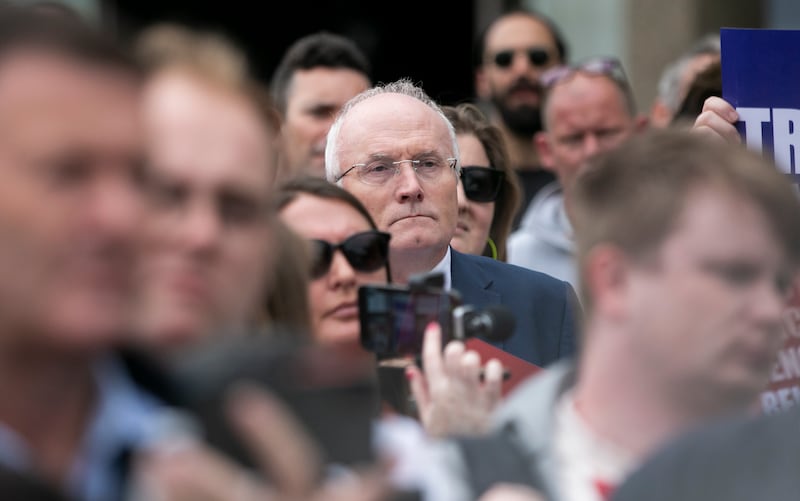
Farewell to RTÉ health correspondent Fergal Bowers, who retired on Tuesday’s News At One during a short and somewhat generic update on waiting lists.
Describing the brief he has held since 2004 as a “privilege” to cover, he highlighted the hepatitis C, Cervical Check and children’s spinal surgeries as well as the pandemic as standout stories.
“But most of all I’d want to thank the parents and families and friends of patients who I’ve interviewed over the years who bravely went public with their stories so things might change, he said. Hear, hear.
What now? We hear some retired health correspondents take well to writing books. Bowers has four in his catalogue already. Some are health-focused, but others show a wider range of interests: The Work, on Opus Dei, in 1989, and 2001’s A Murder in the Family, which covers his brother Colman’s murder of his wife, Georgina, in California, which resulted in a prison sentence of at least 26 years, in 2000.
The sun is setting for a number of high-profile medical journalists in the post-pandemic period. The BBC’s Hugh Pym, in situ for 12 years as health editor, won’t be replaced when he retires early next year. His job will merge with that of medical editor Fergus Walsh (Irish father), who himself is 65.
Shauna Bowers, The Irish Times’s Health Correspondent remains in post, however, and is, as unlikely as this sounds given the relatively uncommon surname and the specific beat, no relation – or only very distantly.
Gerry who?
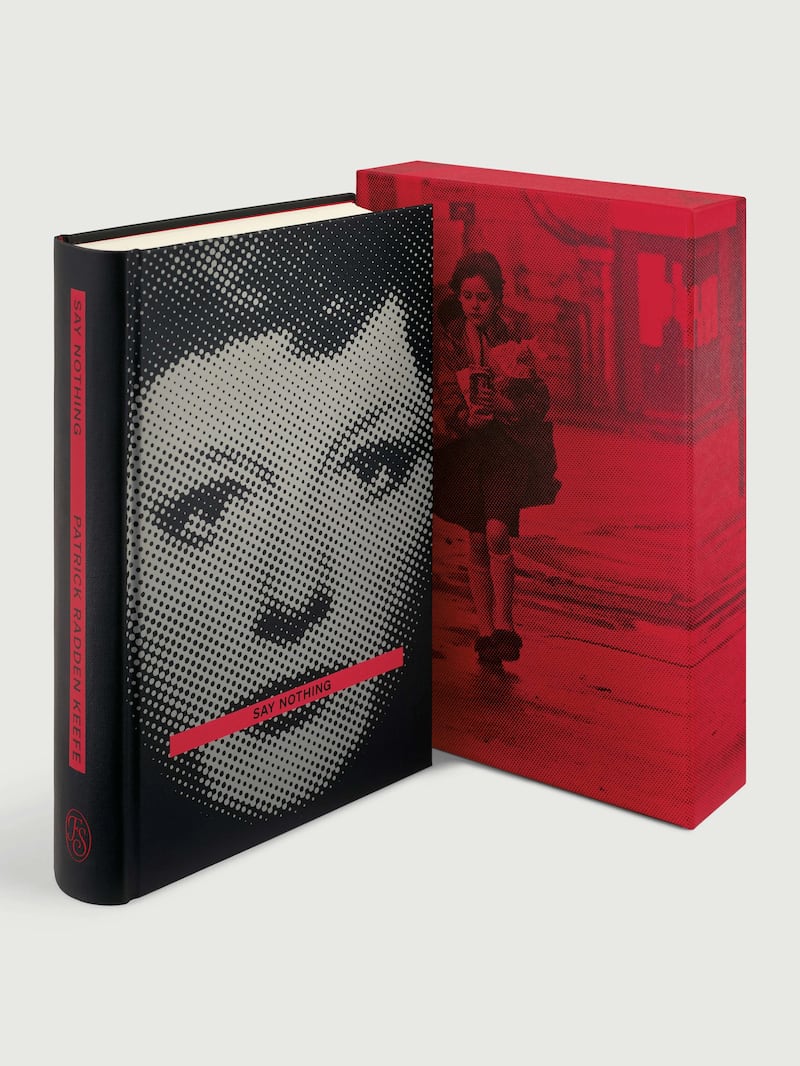
Say Nothing, US journalist Patrick Radden Keefe’s account of the 1972 murder of widowed Belfast mother of 10 Jean McConville and the surrounding IRA culture, took a step towards modern classic status lately with the publication of a Folio Society edition just in time for Christmas.
The elaborately decorated efforts include out-of-copyright authors such as Jane Austen and Bram Stoker, but the premium publisher has also begun to offer more recent nonfiction, including chef Anthony Bourdain’s Kitchen Confidential. Radden Keefe’s book, less than a decade old, joins them at a princely price of £90 (€108) – plus whatever duties may be levied, if ordered online.
Sweetening the deal for those already familiar with the story from reading it before, watching the television series or reading the news in this part of the world, the edition gains an introduction by the poet Paul Muldoon, an Armagh man whose career, beginning with the collection New Weather in 1973 at the age of 22, has unfolded in parallel with some of the late 20th-century’s most prominent community activists.
Observing the continued dysfunction of the Northern Ireland government at Stormont – “or as it’s styled in Ulster-Scots, the Norlin Airlan Assemblie” – he mulls the “profoundly intimate society” depicted in Say Nothing as he recalls his own inevitable run-ins with some of the characters involved: Martin McGuinness in Washington, Dolours Price (“fleetingly”) in a backstage area.
“I was at an event recently in the Falls Road Library when someone who looked awfully like Gerry Adams came up to me and told me, as he glided by, that he was a fan of my work,” he says.
“I’m not sure why this Gerry Adams thought I might know him. After all, what has he ever done?”
Adams has always denied involvement in the abduction and murder of Jean McConville.