
In the lead up to next year’s World Cup, Andy Farrell has been charged with the close to impossible task of developing four quality Irish players in every position and trying to provide them with precious game time. He is also expected to win every match against quality national teams.
Now that is a tough gig.
We only need to look back to late September to see the tightrope coaches must walk when trying to develop player depth. After winning three spectacularly physical Test matches against New Zealand, Rassie Erasmus selected many of his second 15 Springboks to face the Wallabies. When the Australians unexpectedly walked away with victory and the Mandela Plate, we all saw that even the world champions have limits to their depth of talent.
In November 2018, after two excellent performances against France and Ireland, then Wallaby coach Dave Rennie, decided to give his fringe players valuable match time against Italy. With RWC 2019 only months away, it was undoubtedly the right decision for his players’ long-term development. Australia’s Ben Donaldson missed a conversion in the 81st minute and Italy won by a single point.


That defeat damaged egos inside Rugby Australia, who then made what was by far the worst decision I have ever witnessed administrators make in rugby – they dismissed Rennie and appointed Eddie Jones. Well, you know the rest. It was self-inflicted organisational carnage.
Now, as the head coach of his native New Zealand and eight months out from another World Cup, Rennie has stuck to his philosophy and has provided 53 New Zealand players with valuable match experience so far in 2026.
Like Rennie, Farrell’s November squad selection tells us that he plans to give game time to his wider squad. While Ireland’s starting team does contain several world-class players such as Dan Sheehan, Tadhg Furlong, Jamison Gibson-Park and Tadhg Beirne, a concerning percentage are a mix of ageing warriors and talented but yet to be proven understudies.

Ryan Baird, Sean Jansen, Robert Baloucoune and Sam Prendergast are part of a cohort who have yet to show they can step up into the world-class category and take Ireland deep into RWC 2027. Farrell must discover if they are pretenders or the real deal.
Should he give more young guns a chance, or do his grizzled, ageing warriors, who have been so loyal, have another World Cup season inside their creaking bones?
Here we must remember that Test match rugby is as much a mental game as it is physical. The psychological strength required to perform in the world’s great rugby cathedrals can only be mastered through experience. Some players who are highly competent at club level cannot make the required mental adjustments to succeed on the international stage.
Sports psychologists tell us that players have to learn how to be comfortable at being uncomfortable. Inspector Harry Callahan, Clint Eastwood’s legendary character in the Dirty Harry movies, used his own streetwise psychology when he was giving advice to a rookie cop. “If you want to play lumberjack, you better learn how to roll the log”.
The significant improvement in Sam Prendergast’s performances this season is proof that it takes time for young players to learn how that log rolls. While patience is a commodity in short supply in professional sport, the fact remains that learning how to perform as an elite outhalf takes time.
That same time pressure is ticking away for Ireland’s preparation for RWC 2027.
Their last three performances during the July edition of the Nations Championship fell between mediocre against Australia and below standard for Japan and New Zealand. Ireland have not beaten the Springboks in two years, France in the last three years or New Zealand in four. Meanwhile Australia have defeated the Springboks twice in the past two seasons and last year the Pumas defeated both New Zealand and South Africa.
Those facts should serve as a much needed reality check for all in Irish rugby. Results do not lie. Since 2024, Ireland have not played to the maximum of their potential, so the challenge the Pumas will bring to the Aviva on Friday night is real.
Over the last 25 years, the Pumas have displayed, on multiple occasions, that when they are mentally focused they can beat the best in the world. Many seem to have forgotten that last year they defeated the Lions at the Aviva.
So much of the Pumas’ success is based on their fearless aggression, which is fuelled by the enormous passion and pride they carry for their jersey. That is something we should all admire.
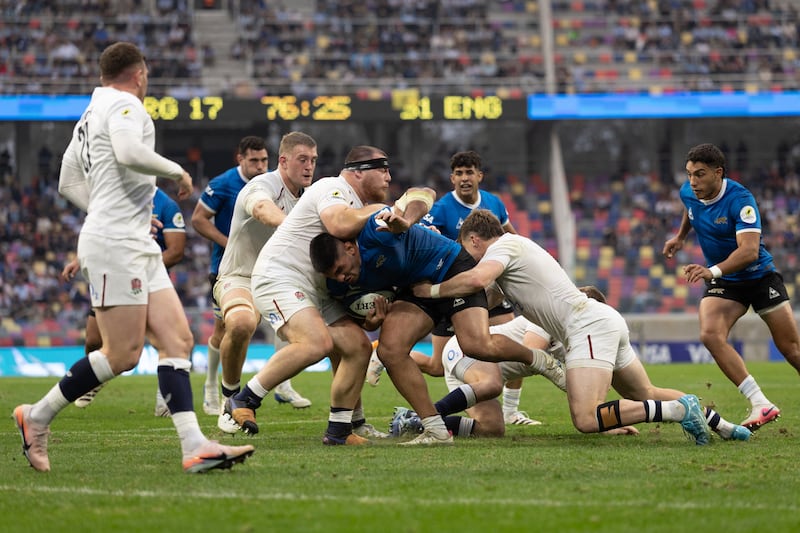
The downside of relying on such emotive energy is that when it goes unchecked, it can boil over into uncontrolled rage. This is exactly what happened last July against England, when the Argentineans were overpowered by their own emotions. The players’ behaviour towards their English opponents and the referee broke rugby’s most cherished ethos. The players’ animosity leaked into the crowd, which triggered some exceptionally ugly and regrettable behaviour.
I know that Felipe Contepomi is a man of the highest character. As a leader, he must ensure that his team not only performs their rugby skills to elite standards, but that they conduct themselves in a manner befitting the famous Argentinian jersey, because there is no doubt that the rugby world lost respect for the Pumas after their atrocious conduct against England in July.
While the Pumas have never defeated Ireland in Dublin, they have the talent and a game plan capable of causing a major upset. While the Aviva factor should be enough to get Ireland home, they must perform at a far higher standard of accuracy than they displayed in July if they are to keep their unbeaten home record secure.