
In the GAA, this is the season of Being Taken for Granted, a condition closely related to the self-fulfilling assumption that Somebody Will Do It. At club AGMs all over the country in recent weeks, there were people who stayed in posts out of a sense of duty, or light-touch incarceration, or because they could find no alternative. It wasn’t why they did it in the first place, and it shouldn’t ever come to that, but it is a numbers game now.
Volunteerism is the GAA’s greatest boast and its most bountiful source of energy. It is also its biggest challenge. Attendances at club AGMs have declined at mass-going rates. Once upon a time, AGMs were vibrant, volatile gatherings, where the events of the previous year were thrashed out and positions on the club executive were filled by contested elections. If nothing else, it was an annual census of the people who cared.
Now, AGMs are emasculated by absenteeism and disinterest. Elections are rare. Anybody at the top table who wants to step down, or whose term has come to an end, must find their replacement before the AGM. Any roles not already filled by persuasion before the meeting starts won’t be filled on the night with raised hands from the body of the floor. In this game of chicken, the floor always wins.
So, under the premise that the show must go on, unblinking, unflinching stalwarts are taken for granted. For volunteers in every walk of life, it is an occupational hazard, so to speak. At the heart of this is a counter-intuitive equation – the inverse relationship between gratitude and service. The longer you stay, the less likely it is that you will be appreciated. Your presence turns into another assumption.
Donald Trump and humanity’s official happiness provider team up to turn World Cup weird

Ben Healy: ‘When you see me at the Tour, I am super skinny. But that’s not sustainable’

All-Ireland winner George O’Connor on finding mental wellness after ‘years of pure hell’

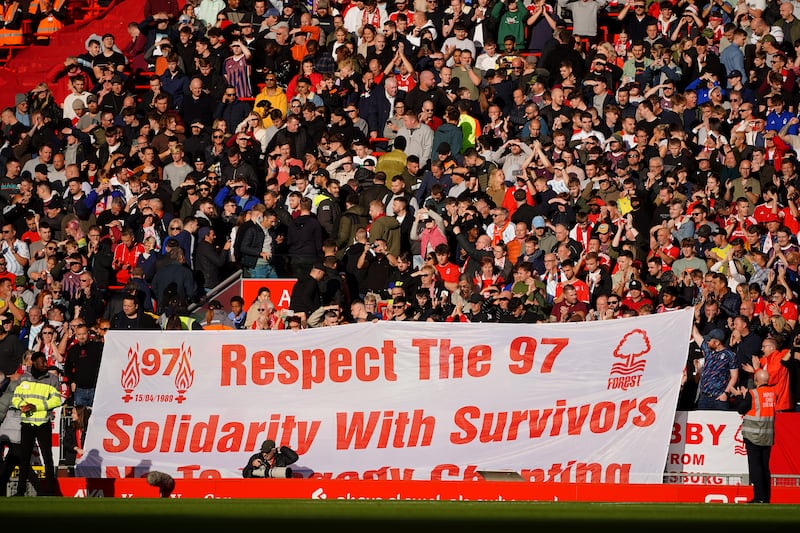
Malachy Clerkin: Shameful police reaction another wound inflicted on Hillsborough families
One of the new dynamics in GAA clubs is seeking out energetic retired people with a passion for the club. The assumption is that people who are no longer in full-time employment have a floating surplus of free time. The extension of this line of thinking is that the free time of busy people is somehow more valuable and is, therefore, never taken for granted. The thing never said is that everyone’s time has precisely the same value, whether they are perceived to be busy or not.
You thought volunteerism was uncomplicated. The GAA lived with that conceit for generations. That is no longer the case. In the Age of Gratification, volunteerism is a hard sell. By definition, it is an unselfish act, but, in the modern world, there is a growing resistance to doing something for nothing, or on the unvouched promise that it might be rewarding.
In recent weeks, intercounty players had a victory in this battlefield. Outside of their ranks, very few GAA people could care less about image rights, but for the Gaelic Players Association (GPA), it was a significant breakthrough. Any company seeking to use a player’s image for promotional purposes now will need the players’ permission and pay a fee.

The players are still volunteers in the sense that none of them are being paid for the time they give to playing or training, but a line had been crossed and their volunteerism was being exploited by others for commercial reasons. The only way to ensure they weren’t being taken for granted was by financial compensation.
In GAA clubs all over the country now, volunteers are handling money on a scale that was unknown even 10 or 15 years ago. More and more clubs are not just paying coaches but paying for professional services in support of the coaches and the players. None of those people are ever taken for granted because a monetary value has been placed on their time and expertise.
The massive expansion of the coaching economy at club level means that – as the Kerry board chairman Patrick O’Sullivan pointed out at Kerry convention last week – clubs can soon expect attention from Revenue Commissioners. Kerry, Cork and a number of other counties have made a voluntary tax disclosure for the period 2021 to 2024 and Revenue have made it clear that when they have finished with county boards, their focus will turn to clubs.
When it comes, the people dealing with that dentist-chair scrutiny will be volunteers. The kind of people who were prepared to accept responsibility when numbers at the AGM were thin and people were running for cover in case their arms were twisted.
The problem for the GAA is that clubs have turned into small and medium-sized businesses. For volunteers, it involves 52-week engagement and maybe skill sets for which they have no training.
The people who are running away from jobs on club executives and club committees are acutely aware of the ever-changing landscape. Everybody has problems at home and problems at work; why would they invite another chapter of stresses into their lives? That is the calculation the bystanders make. Can you blame them?
Through the generations, the GAA glamourised volunteerism, but that glamour has faded. People’s motives are different now. What is in it for them?
The easiest way to get people on board now is with a team that involves one of their kids. The odds are that they will step away as soon as their kid finishes, but at least there is a window for hard-wired recruitment. They might get hooked. They might see a higher purpose. They might develop a taste for the vintage glamour of volunteering.
But fewer people are prepared to make open-eyed sacrifices and volunteer in an organisation where gratitude is scarce, problems are never-ending and leisure time disappears into a black hole. In the Age of Gratification, it is hard to varnish that.
The obvious solution is an equitable, manageable division of labour, where more people do a bit so that nobody does too much. But in most clubs, the workforce is shrinking in inverse proportion to the workload. It is a 28-inch belt for a 36-inch waist.
In GAA clubs everywhere, the gap between the interested bystanders and the people who are taken for granted has never been greater. The pressure on volunteerism has never been more consequential.
Nobody should ever be taken for granted.