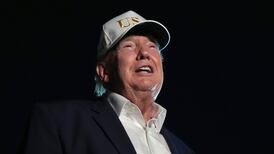
Republicans called for US president Donald Trump to scale back the policies many blamed for their midterm blowout. Trump ruminated about deals with Democrats.
Stephen Miller was unfazed.
A day after the elections, as votes were still being counted and the Democrats’ victory margin seemed to increase by the hour, the long-time Trump aide and Maga stalwart convened one of his regular calls with national security officials to get an update on immigration policy.
There was no talk of the results of the midterms or suggestion of scaling back the hard-line immigration approach that contributed to Republicans’ steep losses, according to people with knowledge of the call, who spoke on condition of anonymity to describe a private discussion.
RM Block



Instead, Miller continued to push the officials to carry out an agenda that has in the past year included ramping up deportations, driving down border crossings and removing immigrants to faraway nations they were not from.
In other words, the architect of some of the administration’s most divisive policies demonstrated that he would aggressively pursue more of the agenda that many voters rejected Tuesday.
Now, after being named on Friday as White House chief of staff, Miller is poised to help oversee what is likely to be a combative final two years of Trump’s term. And as Democrats vow to investigate the very policies that Miller helped devise, Miller, the ultimate Trump loyalist, is in a prime position to continue his long-time pursuit of limiting checks on executive power.
If Miller’s predecessor, Susie Wiles, preferred to stay behind the scenes while trying to temper Miller’s brusque approach to issues like immigration, the president on Friday signalled that he was ready to more fully empower a hard-nosed lieutenant who had proved his loyalty and was happy to be a visible spokesperson for the president and his agenda.
“He’s a great fighter,” Trump said Friday after landing in Florida. “He’s been with me right from the beginning.”
“He’s very loyal,” the president added.
For Miller (41) his new role is the culmination of a rise from Senate aide to speech writer in Trump’s 2016 campaign to the most powerful policy staff member in the modern history of the presidency.
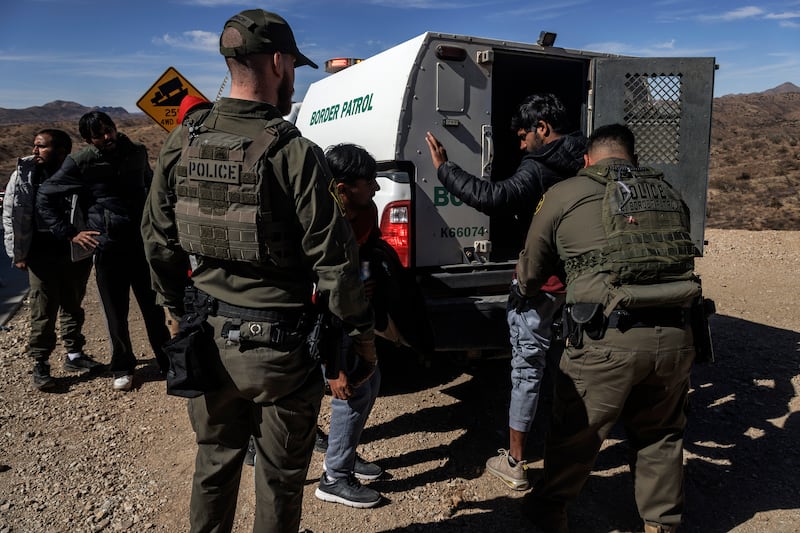
In addition to helping oversee the militarised crackdown of the US-Mexico border, he set in motion the suspension of US refugee programs and the deadly deportation crackdowns on American streets.
But his influence during Trump’s second term has extended beyond immigration policy. He also pushed Trump’s lethal strikes on civilian boats in the Caribbean that the administration claimed were carrying drugs. He helped use the powers of the federal government to target political opponents and universities, and oversaw the federal crackdown in the District of Columbia.
Miller, whom the White House declined to make available for an interview, has pushed Republicans in Congress to resist compromises with Democrats, such as efforts to rein in Immigration and Customs Enforcement. He was heavily involved in the efforts to assert more federal control over elections, including at one point this year circulating a draft executive order to try to limit mail voting, a version of which Trump ultimately signed.
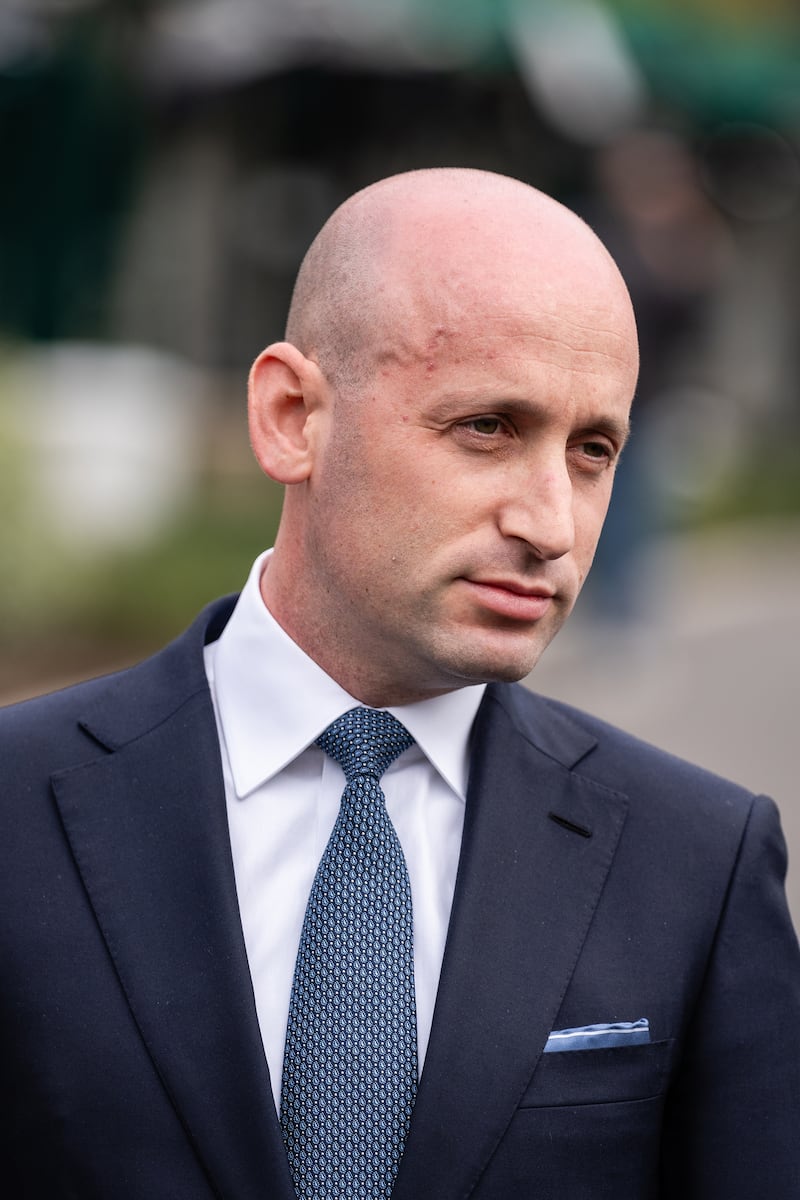
Marc Short, who served as chief of staff to vice president Mike Pence, said Miller was “intertwined” with Trump.
“I don’t think it can be underestimated,” he said. “Most of the shots are being called from Stephen’s office in the West Wing.”
Miller “was kind of already running the White House in so many ways, so you can expect more of the same from the White House that you were probably already pissed off and frustrated about,” said former Republican representative Marjorie Taylor Greene, a Trump ally turned critic, in a video posted to social platform X. “Only this time he’s going to go into a hyper, hyper mode because they’re about to get investigated in every way possible by the Democrats who are going to control the all powerful House and Senate committees.”
Democrats on Friday indicated that, as they prepare to scrutinise the White House, Miller is squarely in their sights. Democrat Robert Garcia, who is set to lead the House Oversight Committee, called Miller the “architect of the unconstitutional Ice raids that have terrorised our communities.”
A White House spokesperson, Lauren Bis, described Miller in a statement as a “key player in delivering on president Trump’s America First agenda since day one.”
“He has spearheaded the administration’s crime crackdown, including in DC and Memphis, record-setting deregulation, unleashed American energy, dismantled drug cartels and secured our border,” Bis added. “In his new role, he will continue to deliver historic successes for the American people.”
Miller has shown no interest in compromising with congressional Democrats and was already preparing for a fight over congressional subpoenas and investigations, the Times reported Friday.
To the extent that he has dealt with Democrats in the past, he has mostly lobbed insults, as he did this month when he ridiculed the Democratic candidate slate as “extremists, freaks and America-hating lunatics.”
His expressions of admiration for Trump are often over the top.
“If it wasn’t for President Trump, the United States of America would not exist right now,” Miller said at a gala at Trump’s Florida residence on Friday, adding: “I swear to you and I pledge to you, Mr president, my absolute loyalty, my unwavering commitment and my total devotion to your success and the success of this country.”
On the global stage, Miller has suggested the administration’s preferred approach is through brute force, defending the administration’s seizure of the Venezuelan leader Nicolas Maduro and Trump’s threats against Greenland.
But throughout his time in the Trump White House, Miller has manoeuvred in a way to preserve his power in the face of crises. Many of Trump’s allies are aware that the Iran war has become politically untenable and alienated members of the president’s base. Miller also understands the war has become a political crisis and believes the president needs to prioritise policies that are more popular with his supporters.
The policies Miller has helped craft have in many ways sought to redefine what it means to be American.
He has long believed that the United States thrived after instituting strict immigration policies in the 1920s blocking off whole sections of the globe. He has argued that loosening those laws hurt the country, calling the landmark 1965 law that paved the way for more Hispanic and Asian immigrants “the single-largest experiment on a society, on a civilisation that had ever been conducted in human history.” Decades of data have shown immigrants’ effects on US society include having lower crime rates and use of public benefits than that of native-born Americans.
Miller was among the cadre of aides who remained steadfast in supporting Trump, even after the January 6th, 2021, Capitol attack – devoting the ensuing four years to planning a return to power.
In the four years Trump was out of office, Miller helped recruit like-minded right-wing lawyers likely to carry out Trump’s agenda without contest. He mapped out Trump’s second-term agenda, overseeing the team drafting the dozens of executive orders that Trump would sign immediately after returning to the White House.
Miller’s approach has at times prompted internal pushback.
Miller and Wiles debated over how wide to “cast the net” on immigration enforcement, Lindsey Graham, a long-time Trump ally and South Carolina senator, said in an interview this year before his death. The debate centred on critical questions of “how far to go, what to do, when to do it” and what methods to use, he said.
For many, it went too far. Along with the economic fallout over the war in Iran, Trump’s deportation campaign emerged as one of the most emotionally charged issues driving midterm voters to the polls in many areas of the nation.
Miller has drawn criticism from members of his party at times this year, including after federal agents shot and killed two Minneapolis residents, Renee Good and Alex Pretti. Republican senator Thom Tillis, told CNN that Miller had “been repeatedly responsible for embarrassment for the president of the United States by acting too quickly, speaking first and thinking later.”

By summer, just months after the chaos of Minneapolis seemed to mark a challenge to Miller’s influence, the administration was once again ramping up immigration arrests in pursuit of Trump’s mass deportation goals.
Miller’s new job did not mean that the criticism from some Republicans would end, particularly on the immigration policies that led to so much political upheaval. Republican Marlin Stutzman, told Fox News on Friday that Miller’s promotion was a “horrible decision.”
Earlier in the week, Stutzman had said the midterm losses should have moved Trump to distance himself from Miller.
“It looked bad on us, the deportation effort,” Stutzman said while addressing a crowd at the Republican headquarters in Allen County. He said president Barack Obama had also surged deportations, “but he didn’t go out and talk about it in the way that, you know, we did.”
“Frankly,” he said, “I think Stephen Miller should be fired.”
This article originally appeared in The New York Times.