The building is a commanding presence in Washington’s often-deserted downtown, dominating the north side of Franklin Square with two gold tipped hexagonal towers rising into the murk of the city sky and bearing the imperishable mast head and font: The Washington Post.
At night, with the lights on, it looks imperious. Donald Trump likes to boast that he has all but eradicated crime in the capital city but on Wednesday, tens of thousands of Washingtonians believed they were witnessing a daylight assault on a beloved institution. One headline, in the Atlantic magazine simply read: The Murder of the Washington Post.
News that the Post was in line for cutbacks had been brewing for some time. But the scale and brutality of Wednesday’s announcement that 300 employees, or one third of its staff, would leave was breathtaking. Those who had lost their jobs were informed by a brief impersonal message written in the meaningless apology of corporate speak. Entire departments- foreign bureaus, sport, books, photography- were eliminated.
Those who lost their jobs ranged from journalists who had started work just months ago to Martin Weil, a veteran of six decades who was on duty on the June night in 1972 when a message was heard on the police scanner: “Doors open at Watergate.”


In late January, Lizzie Johnson, who has been filing stories from Kyiv, described on X her day to day working life: “Waking up without power, heat or running water. But the work here in Kyiv continues. Warming up in the car, writing in pencil, pen ink freezes, by headlamp. Despite how difficult this job can be I’m proud to be a foreign correspondent at the Washington Post.”
On Wednesday, she posted an update: “I was just laid off by the Washington Post in the middle of a war zone. I have no words. I’m devastated.”
It emerged that the Post’s international editor, Peter Finn, who was Roscommon raised before embarking on a distinguished career in US and foreign correspondence, told the executives to exclude him from future plans: he would be leaving along with many of the foreign correspondents he edited.
[ Washington Post lays off hundreds of employeesOpens in new window ]
The out-pouring of sympathy, anger and even grief among former Post staffers and many readers became a rainstorm. So, too, on many social media platforms, was the gloating and the hate: the sneering at the perceived narcissism of the elite media brigade bemoaning the fact that market forces had brought a company to its knees. Companies shed workers all the time! They don’t get to see it portrayed as a tragedy in the national news. Others saw it as overdue comeuppance for a publication that unabashedly championed the left.
But the overwhelming emotion in the city was one of sorrow for a feisty Washington institution. Much of the mythology of the Post revolves around the staggering consequences for the trajectory of US politics following its Watergate revelations and the subsequent resignation of Richard Nixon in 1974.

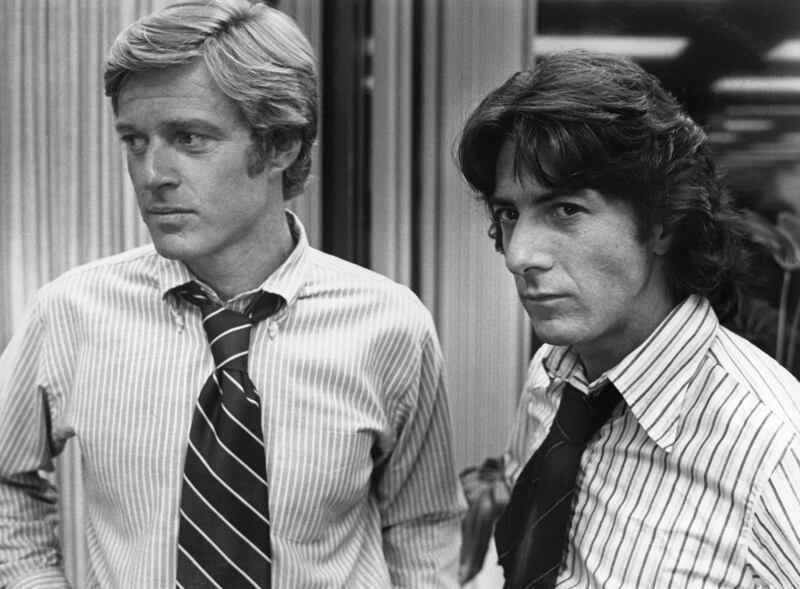
Many of the newspapers’ stars of that era were immortalised in All the President’s Men and, more recently, in The Post. That doggedness and fearlessness entitled the Post to its gallant motto: “Democracy Dies in Darkness.”
During an administration when the centre-liberal mainstream of US politics and commentary are warning about the slow chokehold the current administration exerts on democratic norms, Jeff Bezos, the world’s richest man and the owner of the Post, finds himself in the spotlight. A few days ago, he gave US defence secretary Pete Hegseth a tour of Blue Origin, his space company, to discuss future partnerships with the government.
Senior staff spoke with mystification of the transformation of Bezos’s attitude towards the Post since he bought it in 2013: of his attentiveness and how “kind” he could be and his willingness to lavishly bankroll the expansion of department budgets which had diminished in the latter days of the Graham family era.
And the Post had thrived during Trump’s first term, with a dramatic rise in subscriptions and profitability. Ironically, it drifted during the post-Covid Biden era. By January of last year it was clear that Bezos had joined the other titans of US business in deciding he must play courtier in the new administration. Bezos’s decision last November to block the Post’s election-eve editorial endorsement of Kamala Harris cost the publication some 250,000 subscribers.
The recruitment of Briton Will Lewis as a publisher, reviled, it seems, by employees, hastened its fate. Opinion columnists resigned or were replaced as the tone of the Post became more conservative, and Trump friendly.
Now, more customers have vowed to ditch their subscriptions, which will only hurt the remaining 600 staff who will work on through what seems like an existential crisis for an institution that purported to serve as Washington’s conscience.
The benign interpretation of Bezos’s indifference to the fate of so many employees, and the paper itself, is that he has lost interest in his prestige toy. The more popular view is that serving a broken, subdued – and loyal – version of the Post up to one of its most vehement critics, Donald J Trump, will meet with presidential approval.

He may be right, in the short term. But Bezos is 62 and his personal wealth is hurtling towards $300 billion (€254.3 billion). His story is extraordinary. But universal as the use of Amazon has become, posterity will not much care about someone who became filthy rich by making it easier for people to buy stuff. His ownership of the Post was an opportunity to truly shape and strengthen an institution that has chronicled and reported on American presidencies since 1877.
“So, let me start with something critical,” Bezos wrote in the Post after he assumed ownership in an open letter in which he seemed conscious of Ben Bradlee’s old edict about journalism as the first rough draft in history.
“The values of The Post do not need changing. The paper’s duty will remain to its readers and not to the private interests of its owners. We will continue to follow the truth wherever it leads, and we’ll work hard not to make mistakes. When we do, we will own up to them quickly and completely.”
It’s a horrendously dark moment for the Post. But the newspaper’s story is one of resilience. Bezos’s tragedy – and legacy – will be that he just wasn’t up to the standard.