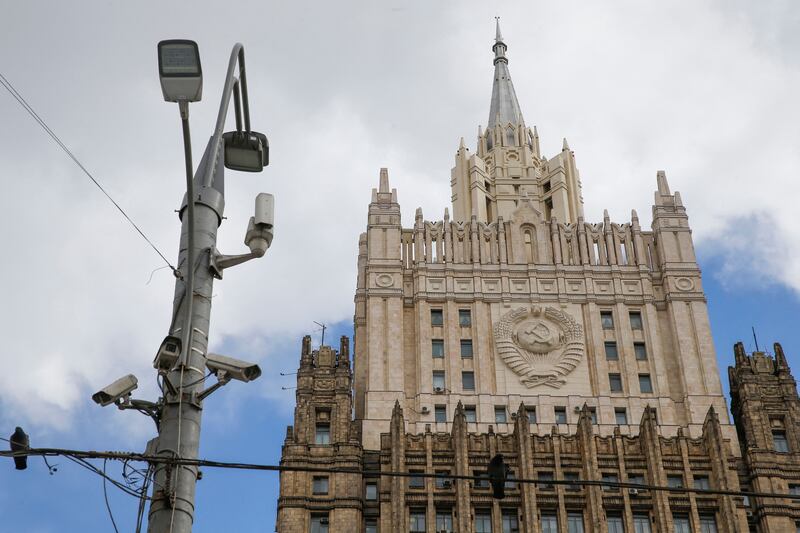
Russia’s security services shut parts of a special surveillance system protecting president Vladimir Putin and his closest aides in the wake of Ayatollah Ali Khamenei’s assassination in Tehran, according to two people familiar with the matter.
The system – which is separate from the nearly 300,000 cameras that surveil Moscow’s citizens – was only turned back on after engineers combed through it in an attempt to hermetically seal it off from the internet, said one of the people.
The extraordinary precautions were taken after Israeli intelligence harvested vast amounts of video footage from Iran’s traffic cameras to help pinpoint the exact location and timing of a February 28th meeting between Khamenei and his closest aides. Several top security officials were killed at the meeting in the opening salvo of the joint US-Israel war on the Islamic republic.
The assassination was a dramatic demonstration of a nascent technological leap: the use of artificial intelligence (AI) to parse through millions of hours of video, collected by thousands of cameras, in order to find and surveil targets.
RM Block


Dmitry Peskov, Putin’s spokesman, did not respond to a request for comment. But the director of Russia’s FSB, Alexander Bortnikov, cautioned regional security chiefs last week that Russia’s vast surveillance apparatus had become a vulnerability – turning the authoritarian regime’s tools to monitor its own citizens into a weakness its enemies could exploit.
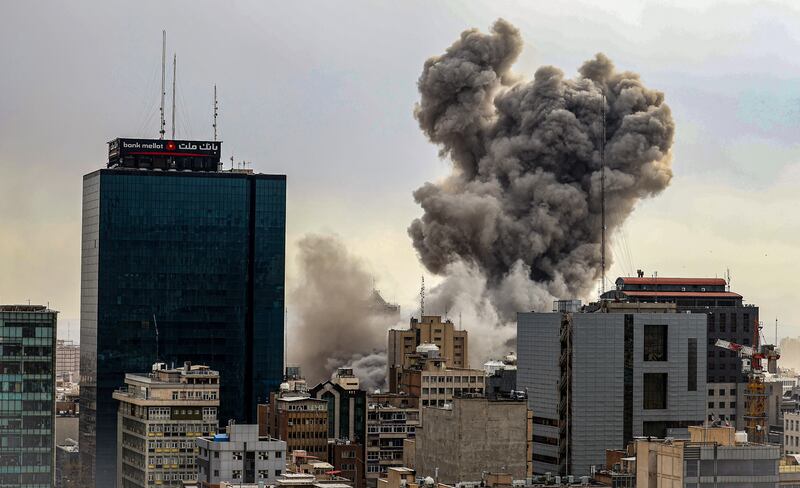
“The recent elimination of senior Iranian officials by the US-Israel alliance is a clear warning sign,” he said on May 26th, according to Russian state news agencies. “The victims’ locations were identified, in part, through software ‘backdoors’ in Tehran’s video surveillance systems.”
Governments have long known that security cameras can be penetrated with ease by experienced hackers or spies such as Israel’s elite signals intelligence units. But advances in AI in recent years have enabled them to pinpoint specific behaviours and patterns in the vast visual data sets that result.
Israel’s intelligence officers leveraged these advances to map out the complex geography of Tehran, find patterns of behaviour among the bodyguards of senior officials, and efficiently isolate targets from millions of hours of footage from thousands of cameras. They combined the information with other intelligence streams, including from human sources.
The visual capabilities of AI technology became far more powerful around 2023 and took a further leap about a year ago, said several people familiar with the complex maths behind it. It is orders of magnitude more sophisticated than the so-called machine learning algorithms that enable facial recognition, gun detection or the tracking of vehicles by make or number plate.
In contrast with older tools restricted to a few dozen preset searches, these new tools allow an almost unlimited range of enquiries by enabling language-based searches on video.
That lets intelligence officers hunt through massive streams of videos using simple search terms, such as two men handing a bag to each other; a person who has changed their appearance, or has changed clothes multiple times in a day; or a vehicle that has recently been painted over, or has driven past the same spot several times in a short period.
“This is the holy grail of surveillance,” said a European official whose country uses the technology on its cities. “We are able to look for behaviour, not objects – it has created a world of new possibilities.”
Interviews with nearly a dozen people, including former and current intelligence officers and senior security officials in four countries, revealed alarm at this new capability. It de facto transforms the billions of dollars spent on CCTV systems – especially traffic cams – into a keyhole through which their adversaries can scan vast cities and secure facilities to extract patterns and secrets at an industrial scale.
Once an individual subject is identified, these systems can rapidly build dossiers of their activities spanning months. That helps to recreate not just their own patterns of life but those of the people they interact with.
Such systems can pull in information not just from CCTV, but also from social media, hacked communications, audio picked up by microphones in smart devices and travel histories.
“To put it in simple words, this is the first time in history that we can communicate using language with computers about what they see,” said Matan Goldner, chief executive of a 15-person Tel Aviv-based start-up called Conntour, whose clients include Israeli intelligence and Singapore’s home affairs ministry.
“The capability of simply watching enemies’ sources is not unique or new – but to be able to get the exact moment that you’re looking for in time over thousands of hours, over thousands of feeds, that’s something really, really new in our world,” he said.
The idea that a country’s own surveillance system could be so efficiently and completely turned against it by its enemies has alarmed counter-intelligence officers around the world.
Their initial reaction was to try to close off vulnerabilities in camera systems themselves, a notoriously difficult task given the many generations of cameras that make up the intricate patchwork of most surveillance networks.
In India, the government set a hard deadline of April 1st – a month after the Israeli hack of Tehran’s camera system was reported – for Chinese cameras to be banned from the country.
Indeed, the Iranians themselves were able to hack security cameras in Israel, according to people familiar with the matter. But without the ability to digest the continuous stream of images, the utility of those hacks was limited.
[ Vladimir Putin retreats to bunkers amid assassination fearsOpens in new window ]
The Russians already had considerable concerns about Putin’s personal safety, especially the risk from Ukraine’s intelligence services, who have penetrated traffic cameras in Russia. They have also used mobile phone location data to aid in assassinations of senior Russian military officials in the heart of Moscow.
Despite Russia’s precautions, one independent Ukrainian hacker said that cameras in Moscow, and even around the Kremlin, “are still working and regularly hacked”. He declined to say if Ukraine had the capability to analyse them at scale.
The US and the UK, which have access to such tools, have provided the Ukrainian military with precise targeting information in the past, including intelligence based on high-resolution images from surveillance drones.
China is starting to use this technology to sharpen its surveillance. Procurement data shows that China is investing in new generations of AI-enabled cameras and software that can interpret scenes, identify patterns of behaviour and retrieve footage using written prompts.
But those advances also create more opportunities for China’s rivals to peek efficiently inside its borders. A security official in a nation in the “Five Eyes” intelligence alliance said: “They’re the ones putting the cameras up – all we have to do is find a way in. And there is always a way in.”
[ Teenagers enlisted as agents of mayhem by Russia and IranOpens in new window ]
The earliest working iteration of these analytical tools that has been reported dates back to around 2023, about the time commercially available AI started being able to generate videos from text commands.
The reverse of that technology – using text to search through video – supercharged the ability to hunt through streams of data collected by the cameras that are omnipresent in modern life.
During December 2025 protests in Iran, the regime installed new video cameras to monitor the crowds, said a person familiar with the situation.
Israel was able to hack those new video streams in real time, said a regional official familiar with the matter, providing valuable insights into the membership of the Basij, a paramilitary force that the regime uses for security.
In March, when the Basij set up checkpoints during the war, Israel could identify them, even though many members stopped wearing their distinctive – if unofficial – camouflage jackets.
This was possible through streams of data collected from dash and traffic cams, car registration numbers and patterns of movement at checkpoints collected from drones, said a person familiar with the operation.

Airis, a Washington-based company that includes veterans of Israeli signals intelligence units, sells a system that can identify, and then track, people who display behaviour matching that of smugglers or cartel members – such as large nylon bags being carried at night or armed men with specific badges or tattoos.
Within just the past year, deploying AI on the various streams of data, including that scraped from social media, has “shortened the time to do this sort of work from days to minutes,” said Rotem Abeles, a co-founder of Airis. “That’s the order of magnitude of improvement.”
Such techniques are not infallible, however. Countries applying AI to surveillance face enemies – especially among non-state actors such as militant groups Hizbullah and Hamas – with low-tech measures such as handwritten messages and old analogue phone lines.
[ ‘An inside job’: US public opinion on Israel has shiftedOpens in new window ]
During the war in Gaza, Israel’s most sophisticated so-called “interception, surveillance and reconnaissance” systems failed to locate the Hamas chief, Yahya Sinwar, architect of the October 7th, 2023 attacks.
Israel and its allies devoted vast resources to finding him, including “gait analysis” to try to pick out the tall, lanky man’s long stride in crowds. Instead, he was killed in October 2024 in what the military described as a chance encounter.
In his final moments, captured by a drone that failed to recognise him, Sinwar was wearing goggles and a tightly wound scarf that covered his distinctive ears – a low-tech foil to Israel’s high-tech hunt. – Copyright The Financial Times Limited 2026