

You trained as a medical doctor. How did you move to public health research?
I had planned a career in hospital medicine, and had done some work in diabetes and cardiology. But in the late 1980s, if you wanted to work in hospital medicine in Ireland, you had to go abroad to do research. I went to the UK and worked initially on high blood pressure in pregnancy, and I subsequently got a Wellcome Trust training fellowship in clinical epidemiology. That led to a Master’s degree at the London School of Hygiene & Tropical Medicine, and from the first day, I thought that this is the kind of work I would do unpaid.
When did you come back to Ireland?
In the late 1990s, I moved to University College Cork as head of the Department of Epidemiology and Public Health and was subsequently dean of the School of Public Health. In 2008 we were funded to establish the Health Research Board Centre for Health and Diet Research.
What has been the main thread of your research?
My research has mainly been on the causes and prevention of cardio-metabolic disease, and by that I mainly mean heart attacks, strokes and type 2 diabetes. A big focus has been on diet, particularly dietary patterns as opposed to individual nutrients or foods and most notably the Dash diet. Dash stands for Dietary Approaches to Stop Hypertension. It is high in fruit, vegetables, wholegrains and low-fat dairy with reduced salt and sugar.
Any findings that stand out?
One I’m quite proud of. Very early in my career I published a study showing that across European countries there appeared to be a relation between salt intake and the risk of dying from stroke that was independent of the known link between salt and high blood pressure. It was the first paper to make that point, and was subsequently replicated. I’ve been working on the salt issue ever since, including advising on national policy on salt and health. My wife and I have reduced the amount of salt we eat. After a few weeks your palate gets used to it, and we really notice it if we forget to ask restaurants not to add salt to our food.
Kim Kardashian is, I think, fast asleep with eyeballs painted on her eyelids. It’s her best scene by far

Studio Mark Moriarty review: I ate one of the best things I’ve had all year in this convivial spot

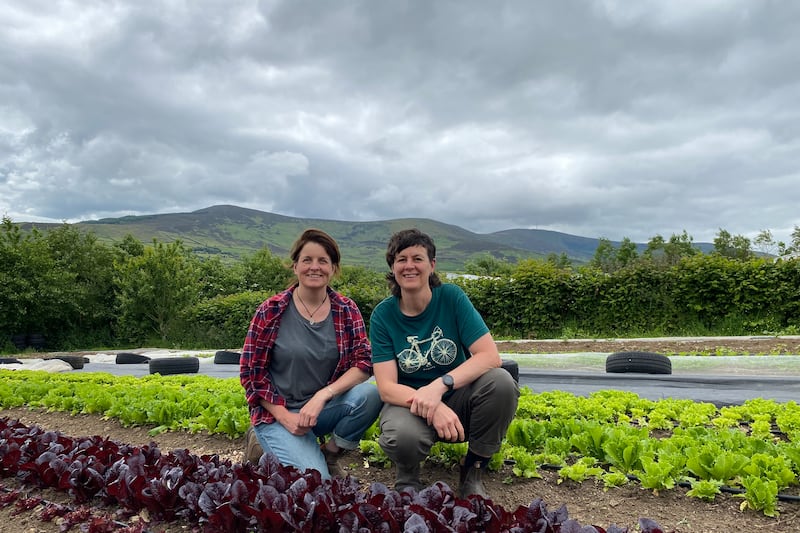
Could Ireland’s food insecurity be solved with a basic income scheme for local growers?
What makes pink cowboy hats irresistible to an Irish audience? Blame Garth Brooks

[ Eating less salt and fat could save more than 1,000 heart deathsOpens in new window ]
What do you wish people understood about improving public health?
I think people have a perception of public health as being about finger-wagging and telling people what to do. But for me, public health is about system-level change, which means changing the environment so that healthier choices are easier choices. For example, for her PhD with our group at UCC’s School of Public Health, Dr Fiona Geaney did a beautiful piece of work on healthy catering in workplaces. Instead of lecturing staff on what they should and should not eat, she worked with the caterers to shift the entire dietary profile. Over six months, that was associated with falling body mass index and significantly reduced absenteeism. It highlights how system-level approaches can work.
You retired in 2023. Have you fully left public health behind?
Not quite. I still supervise one PhD student, I do a small bit of teaching on a pro-bono basis and I chair the board of a community health development organisation on the north side of Cork city, all of which I really enjoy.
What do you do in your spare time?
I read and walk. And I get to do more meditation. I’ve been meditating for about 20 years now. My wife and I both practise, and we occasionally go on retreats together. I go on a silent retreat about once a year. The first couple of days are quite tough, but after the third or fourth day it becomes profoundly restful. No phone, no news. I’d recommend it to anyone.


